Mineral & Zero-VOC Paint
Silicate or clay-based paints — mineral pigments bond chemically to mineral substrates, no off-gassing.
Toxicity Screening — All Clear
This material screens clear across all nine independent toxicology authorities we use on every project.
Material Type
Mineral-Based Wall & Ceiling Coating
Material Description
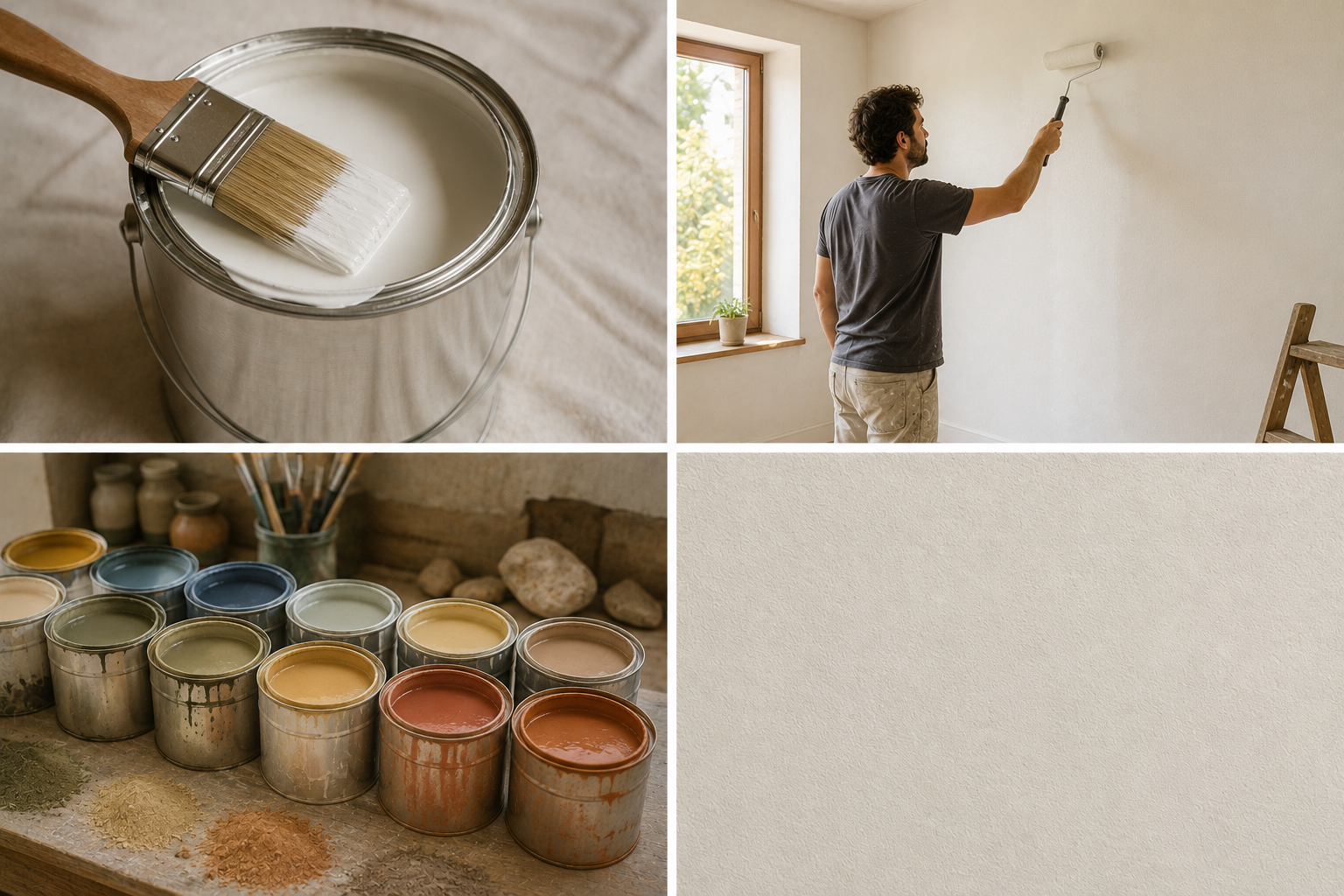
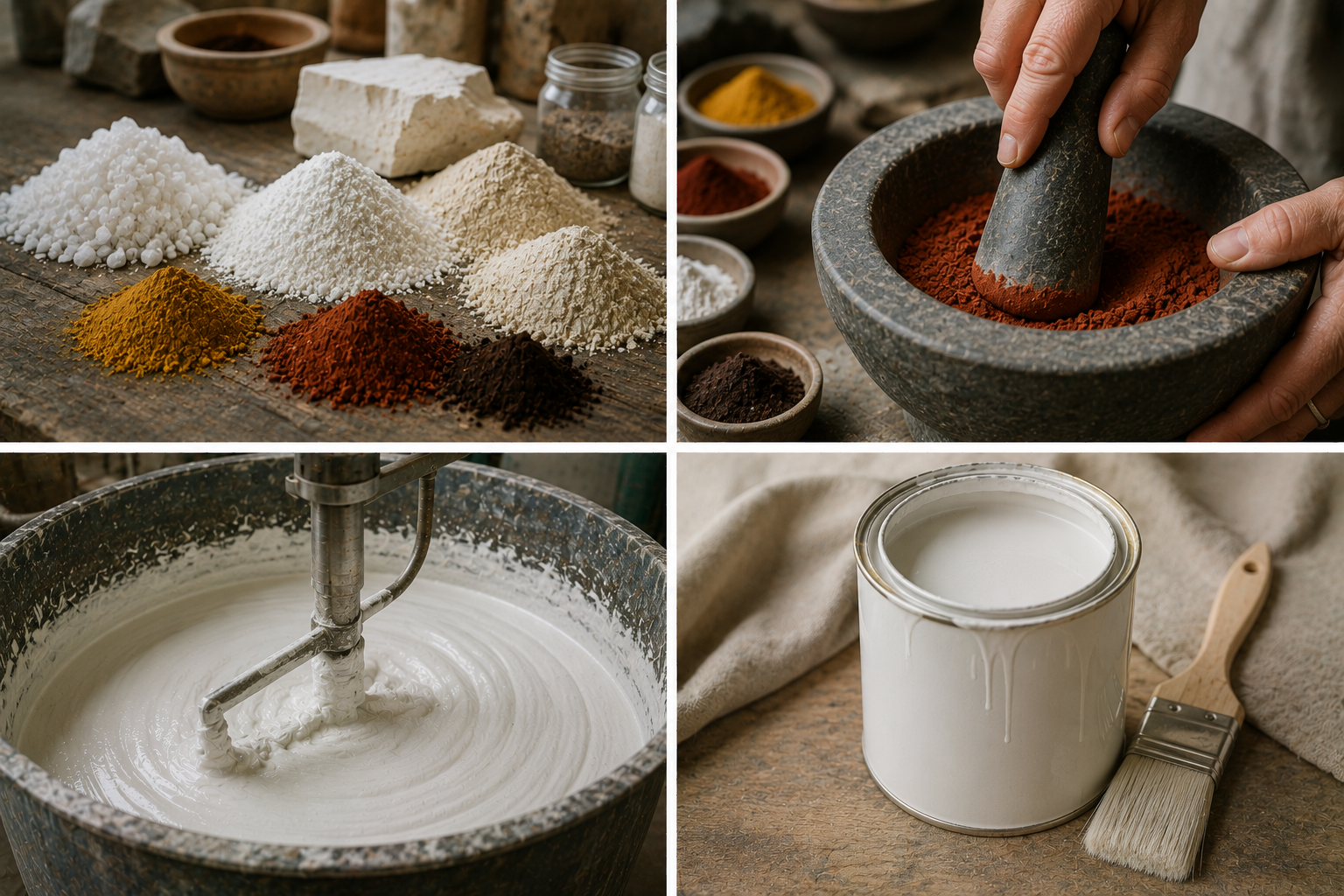
Mineral paint — also called silicate paint, lime wash, or potassium-silicate paint — is fundamentally different from acrylic or alkyd paint. Instead of binding pigment in a polymer film that sits on top of the surface, mineral paint reacts chemically with mineral substrates (plaster, lime, brick, concrete) via silicification, forming an integral mineral-mineral bond. The result is a coating that doesn't peel because there's nothing to peel — the paint is now part of the wall. Zero VOCs, zero off-gassing, and outstanding longevity on appropriate substrates. The mineral pigments used (iron oxides, titanium dioxide, ultramarine, ochre) are themselves stable and biologically inert.
Composition & Origin
Health Profile — All Endpoints Clear
Severity scored 0–10 against the same 10 hazard endpoints we use for the chemical families on the avoid list. Every score is 1–2 — essentially no signal across every endpoint.
Common Forms & Brands
- KEIM Optil & Innostar silicate paints
- BioShield clay paints
- Sherwin-Williams Harmony zero-VOC (acrylic, different chemistry but clean profile)
- Common framing: silicate (mineral) paint, clay paint, lime wash, milk paint, zero-VOC acrylic
Why We Use It
- Zero VOCs during application and after cure
- Mineral-to-mineral bond — paint becomes part of the substrate
- Doesn't peel or flake from appropriate substrates
- Vapor-permeable — walls can breathe through the paint
- Mineral pigments are biologically inert (avoid lead, cadmium, hex-chromium pigments)
Where It Performs Best
- Interior walls and ceilings over plaster or drywall
- Exterior masonry, lime render, and stucco
- Bedroom walls (low-emission sleep environment)
- Heritage building restoration
Building Applications for Mineral & Zero-VOC Paint
Listed alphabetically. Where in a home this material earns its keep.
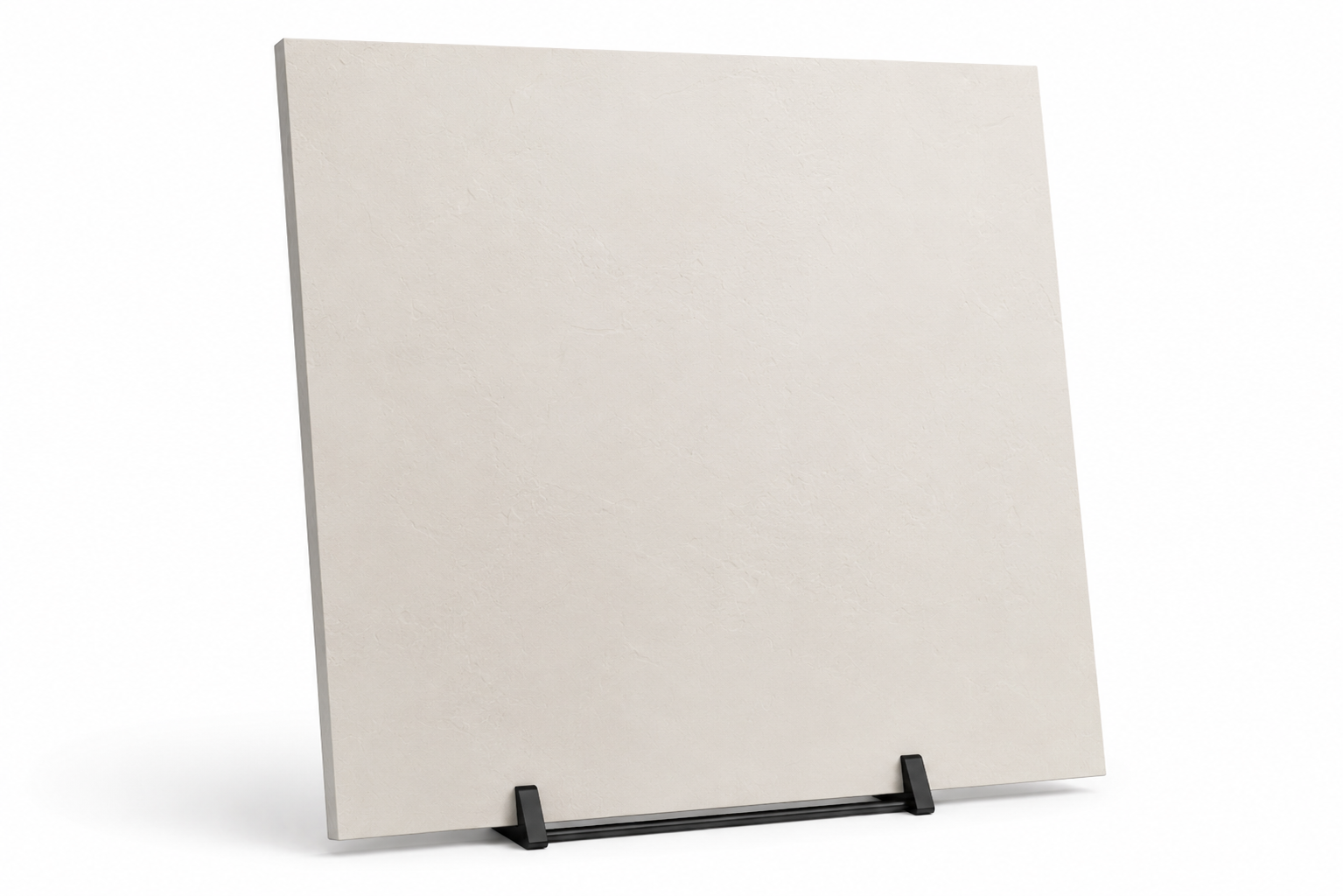 Ceiling Paint (Flat & Eggshell)
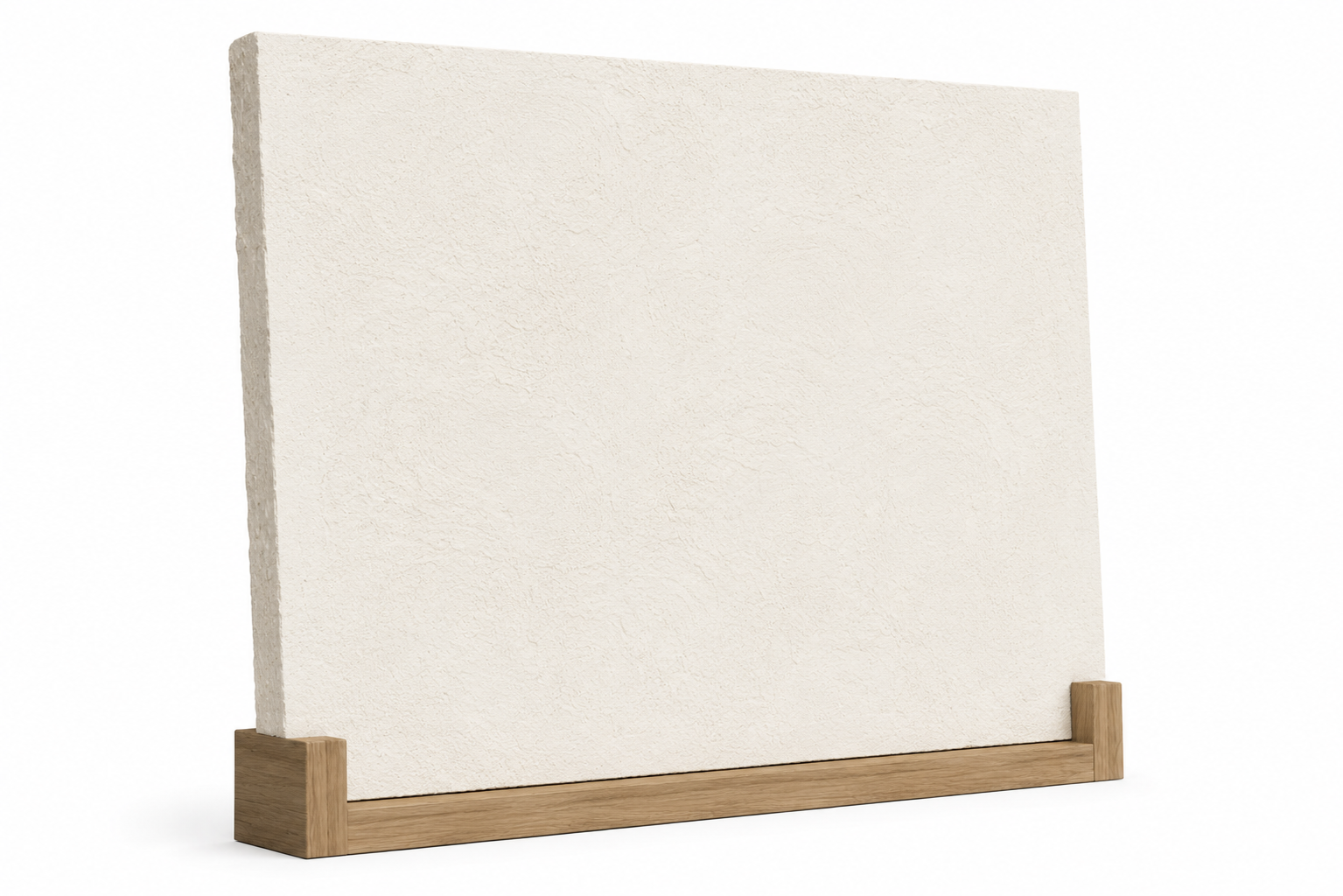 Exterior Masonry & Stucco Coating
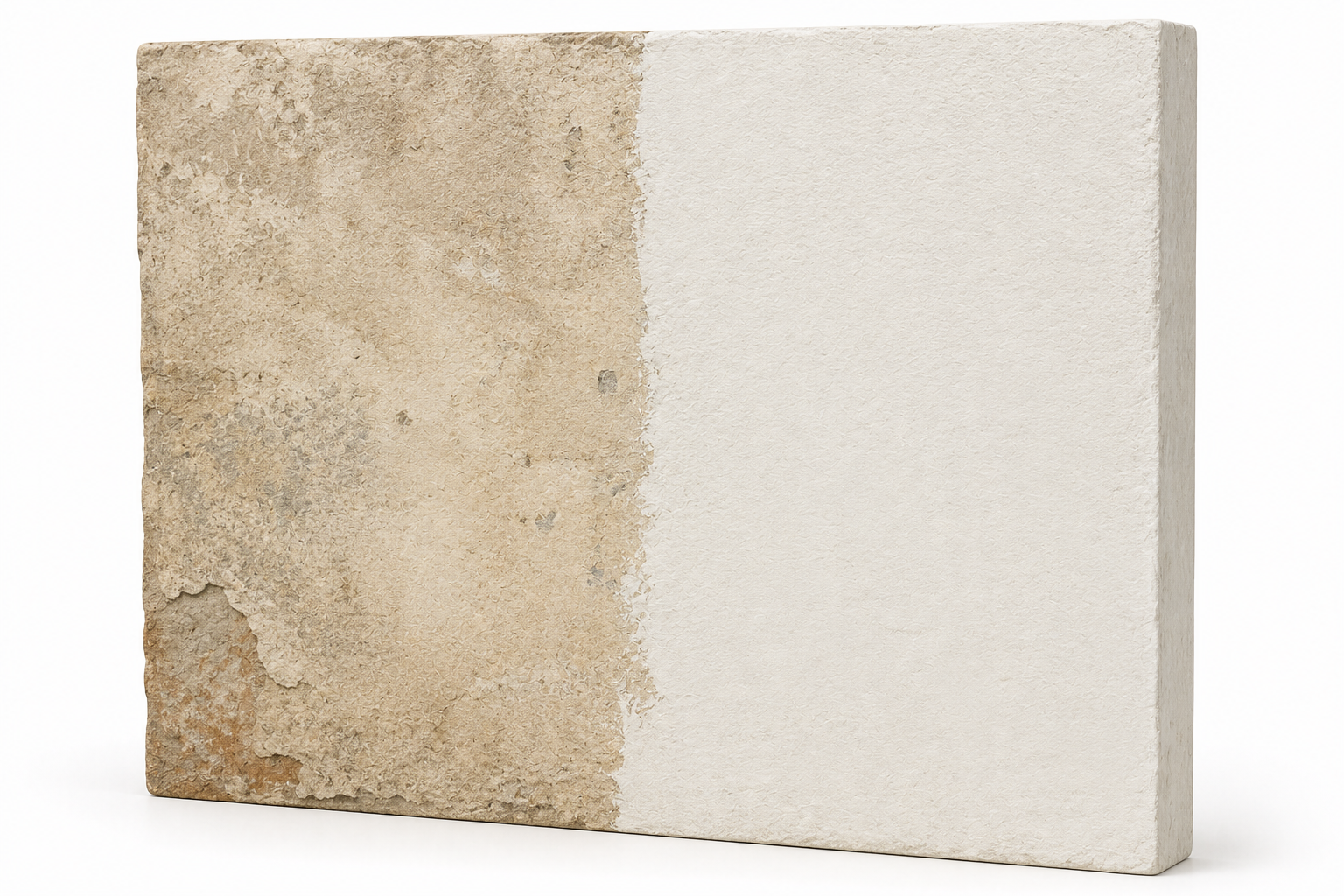 Heritage Restoration Coating
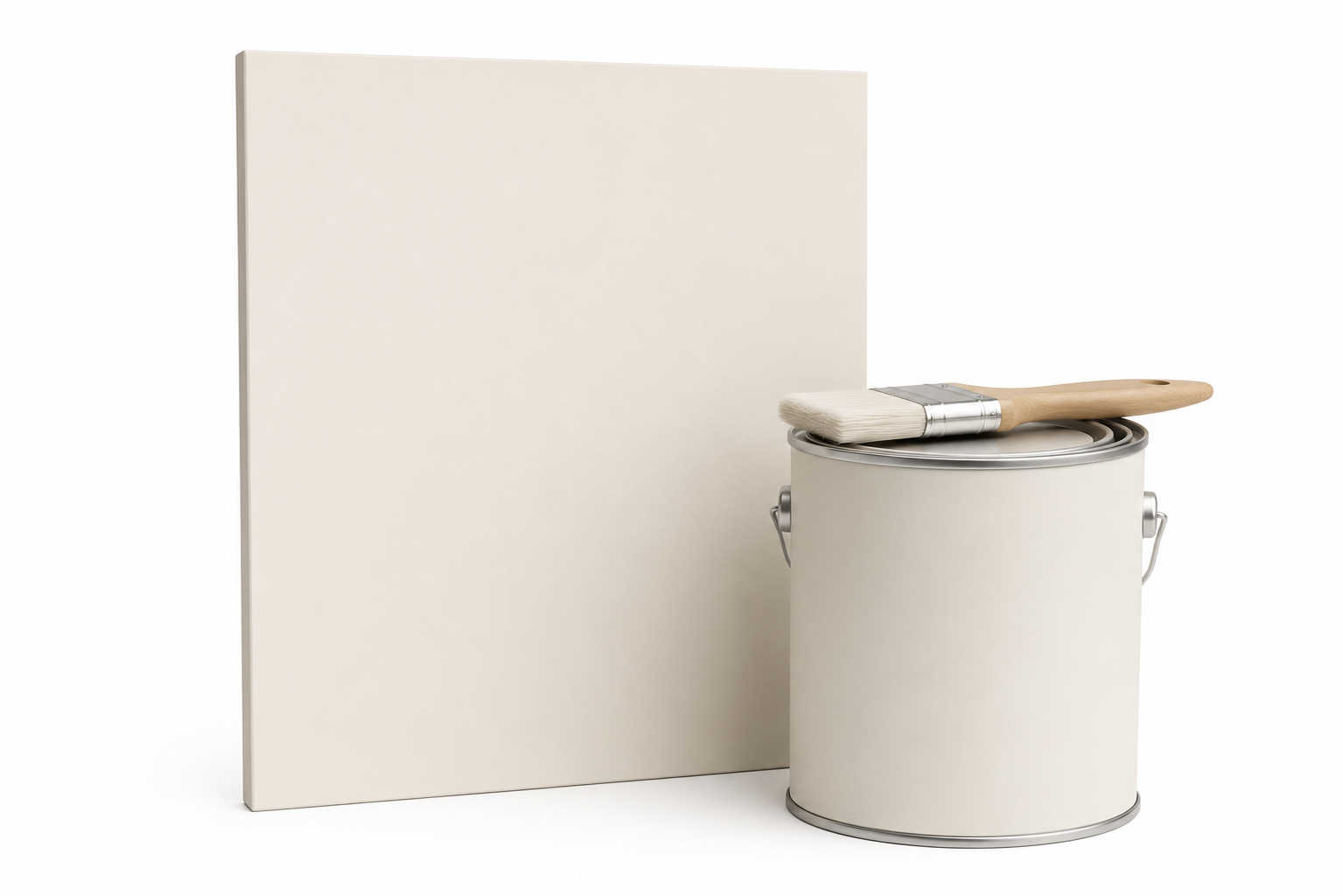 Interior Wall Paint (Living Spaces)
Mineral & Zero-VOC Paint on a Bay Area Home
Mineral & Zero-VOC Paint shows up on our zero energy homes for a reason. An all electric house with a very small heating load only works if the envelope is right, and the envelope is only as good as the materials you are willing to put in it.
If you are planning a new house or a deep remodel and you want this level of material control, that is the whole job we do. Earth Bound Homes builds in Atherton, Palo Alto, Redwood City and across the San Francisco Bay Area.