Clay Plaster
Earthen wall finish — color comes from the clay itself, hygroscopic regulation included.
Toxicity Screening — All Clear
This material screens clear across all nine independent toxicology authorities we use on every project.
Material Type
Earthen Wall & Ceiling Finish
Material Description
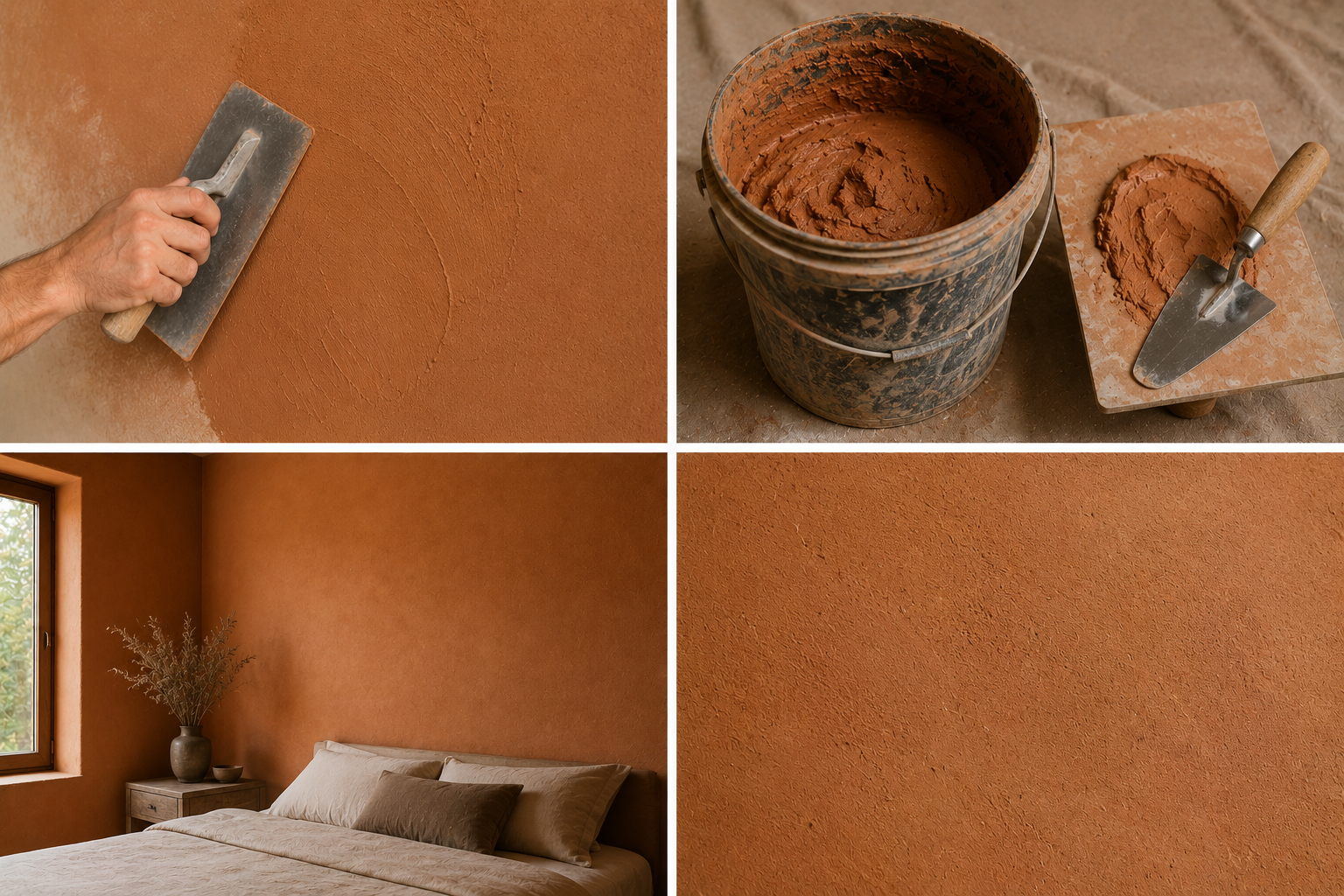
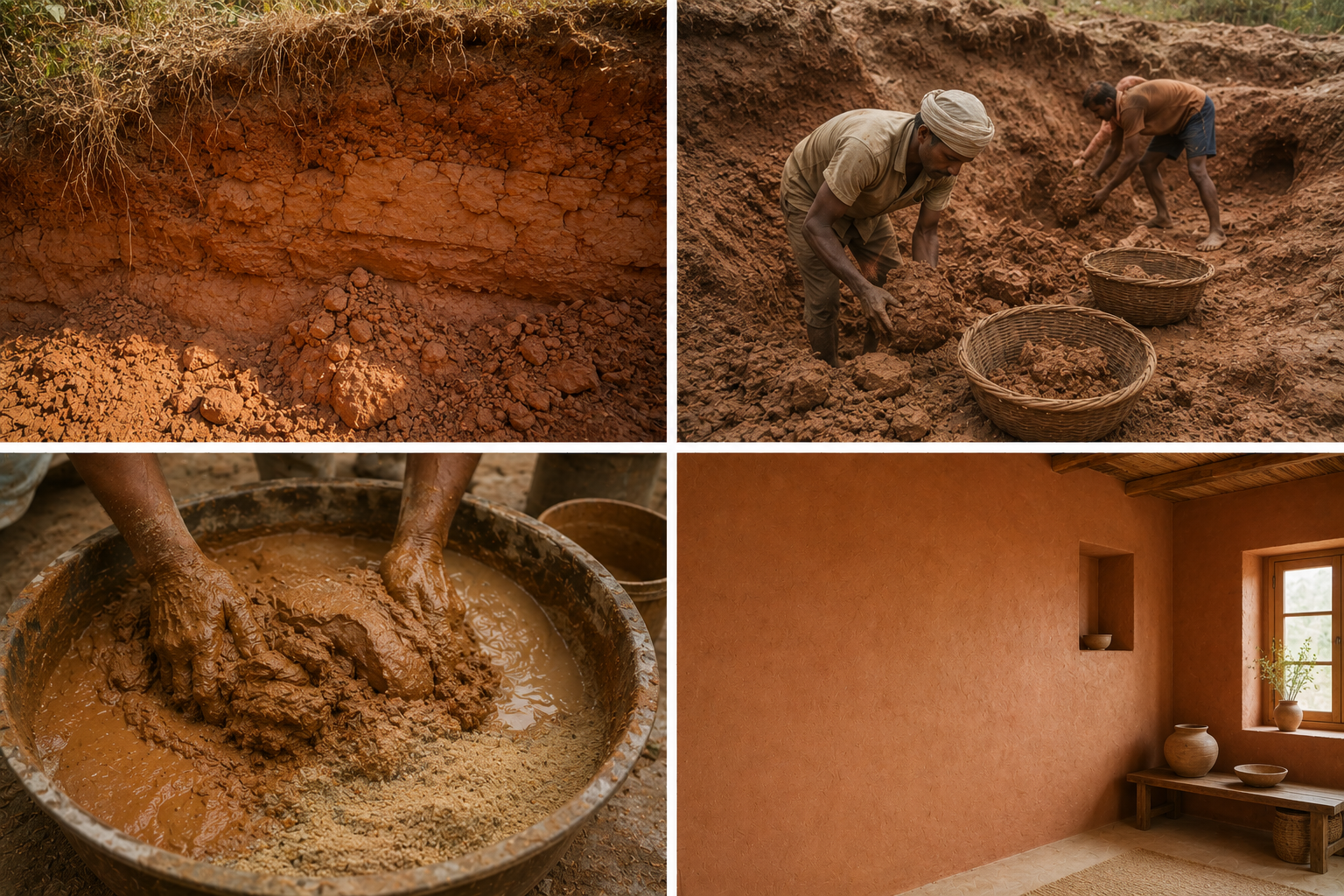
Clay plaster is exactly what it sounds like: clay, sand, plant fibers (often chopped straw or cellulose), and water, applied to walls and ceilings wet, then troweled and cured by air-drying. There's no firing, no chemistry, no off-gassing. The cured wall acts as a hygroscopic regulator: clay absorbs and releases humidity, keeping indoor RH in a comfortable range without active dehumidification. Mineral pigments blend into the wet plaster to provide color, which is integrated into the wall rather than being a surface paint that can chip. Clay walls are repairable indefinitely — re-wetting and re-troweling brings them back to new.
Composition & Origin
Health Profile — All Endpoints Clear
Severity scored 0–10 against the same 10 hazard endpoints we use for the chemical families on the avoid list. Every score is 1–2 — essentially no signal across every endpoint.
Common Forms & Brands
- American Clay Loma, Marittimo, Porcelina
- Clayworks European clay plasters
- Common framing: pre-mixed clay finish, bulk clay + sand, straw/clay layer
Why We Use It
- Hygroscopic humidity regulation — stabilizes indoor RH
- Color integrated through wall depth — chips don't show
- Endlessly repairable by re-wetting and re-troweling
- Zero off-gassing — purely mineral and plant-fiber
- Naturally electrostatic-neutral — doesn't trap dust
Where It Performs Best
- Interior bedroom and living-room walls
- Bedroom ceilings (low-VOC sleep environment)
- Interior accent walls and feature spaces
- Hallways and circulation spaces
Building Applications for Clay Plaster
Listed alphabetically. Where in a home this material earns its keep.
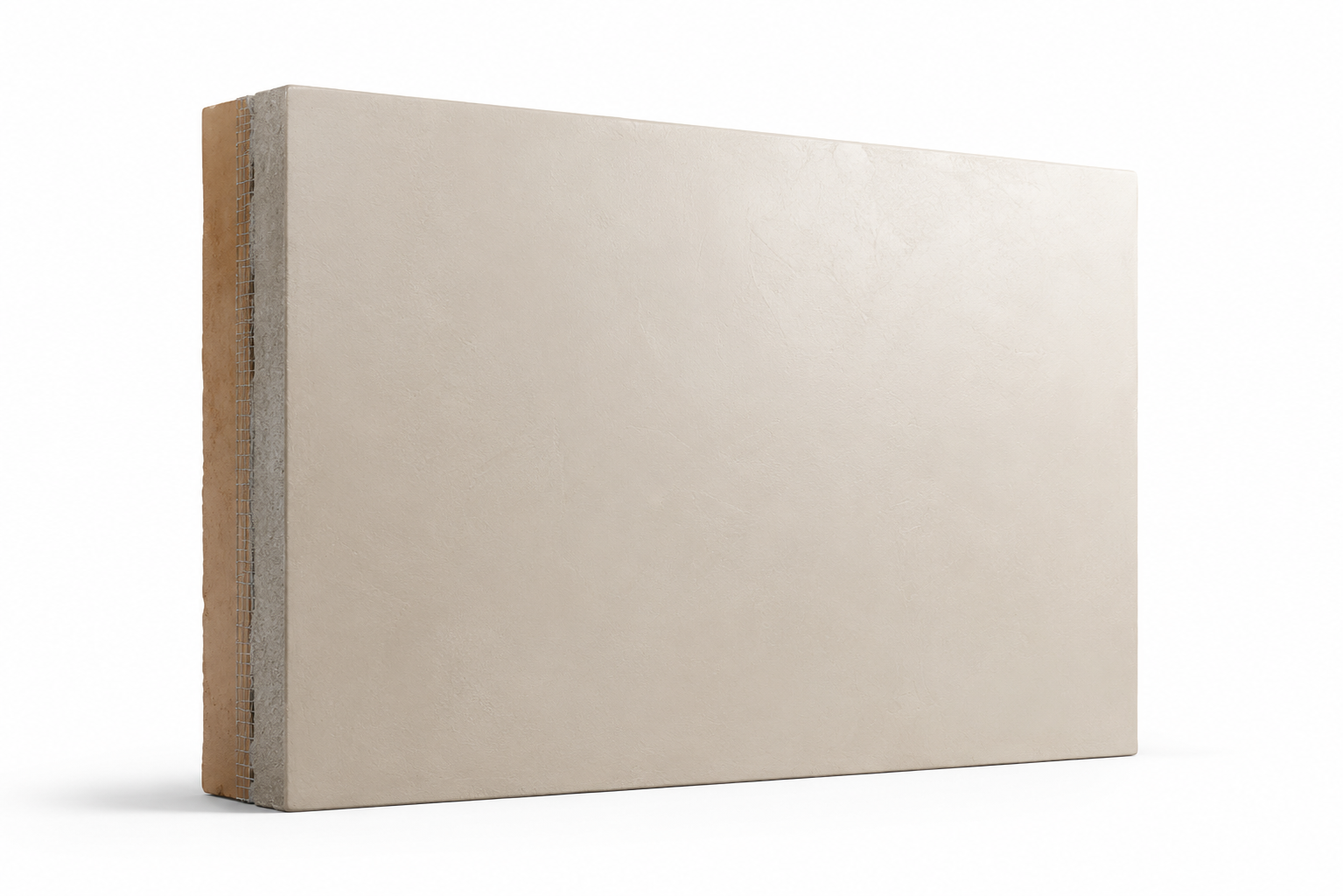 Interior Wall Plaster Finish
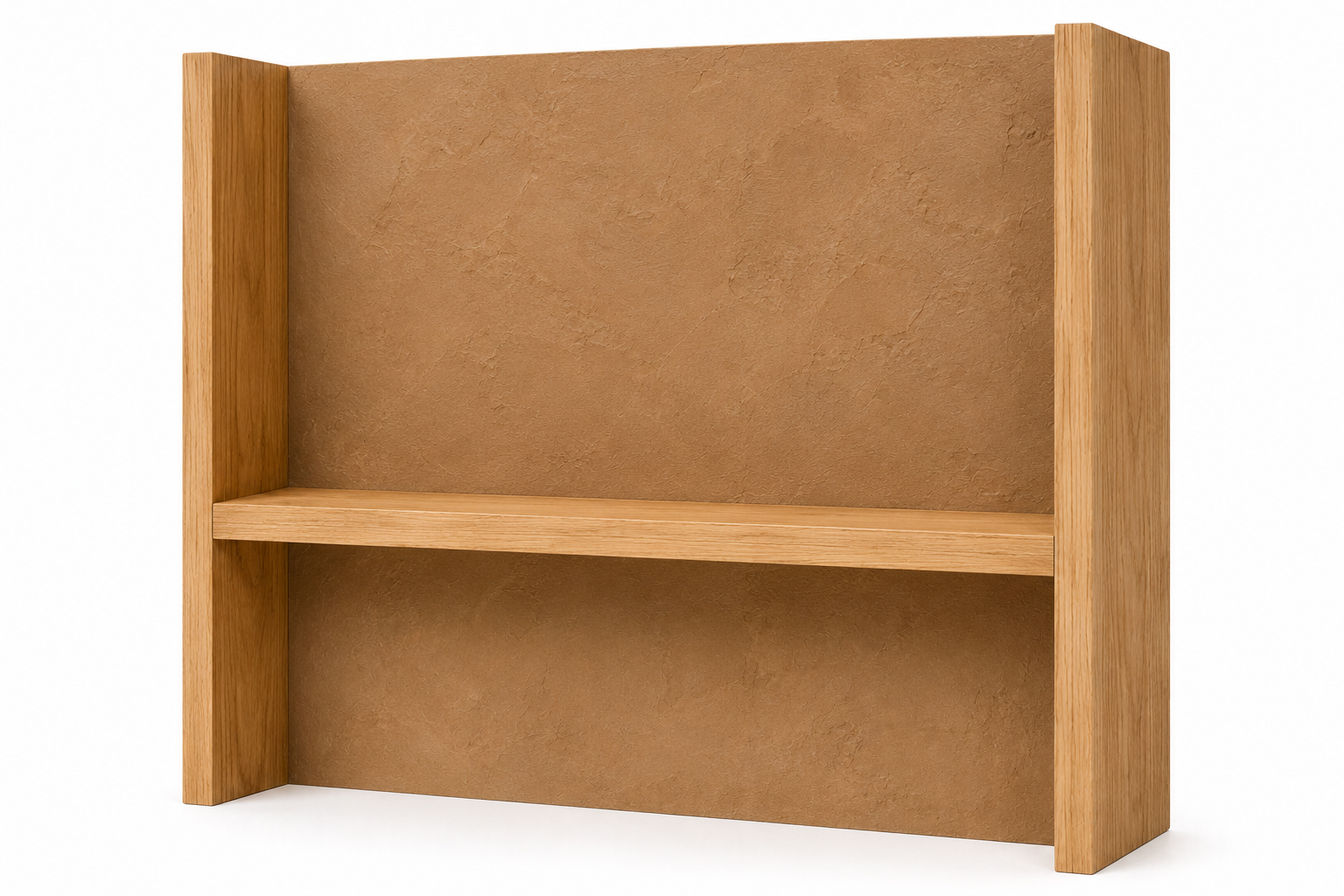 Plastered Built-In Bookcase Backs
Clay Plaster on a Bay Area Home
Clay Plaster is part of how we build a sustainable home that is also a comfortable one. Our wall and roof assemblies are modeled in PHPP before anything is ordered, so insulation, cladding and finish all have to perform together.
If you are planning a new house or a deep remodel and you want this level of material control, that is the whole job we do. Earth Bound Homes builds in Atherton, Palo Alto, Redwood City and across the San Francisco Bay Area.