Rice & Wheat Straw Panels
Compressed agricultural-byproduct insulation inside timber frames — carbon-negative across the entire wall assembly.
Toxicity Screening — All Clear
This material screens clear across all nine independent toxicology authorities we use on every project.
Material Type
Prefabricated Agricultural-Fiber Wall Panel
Material Description
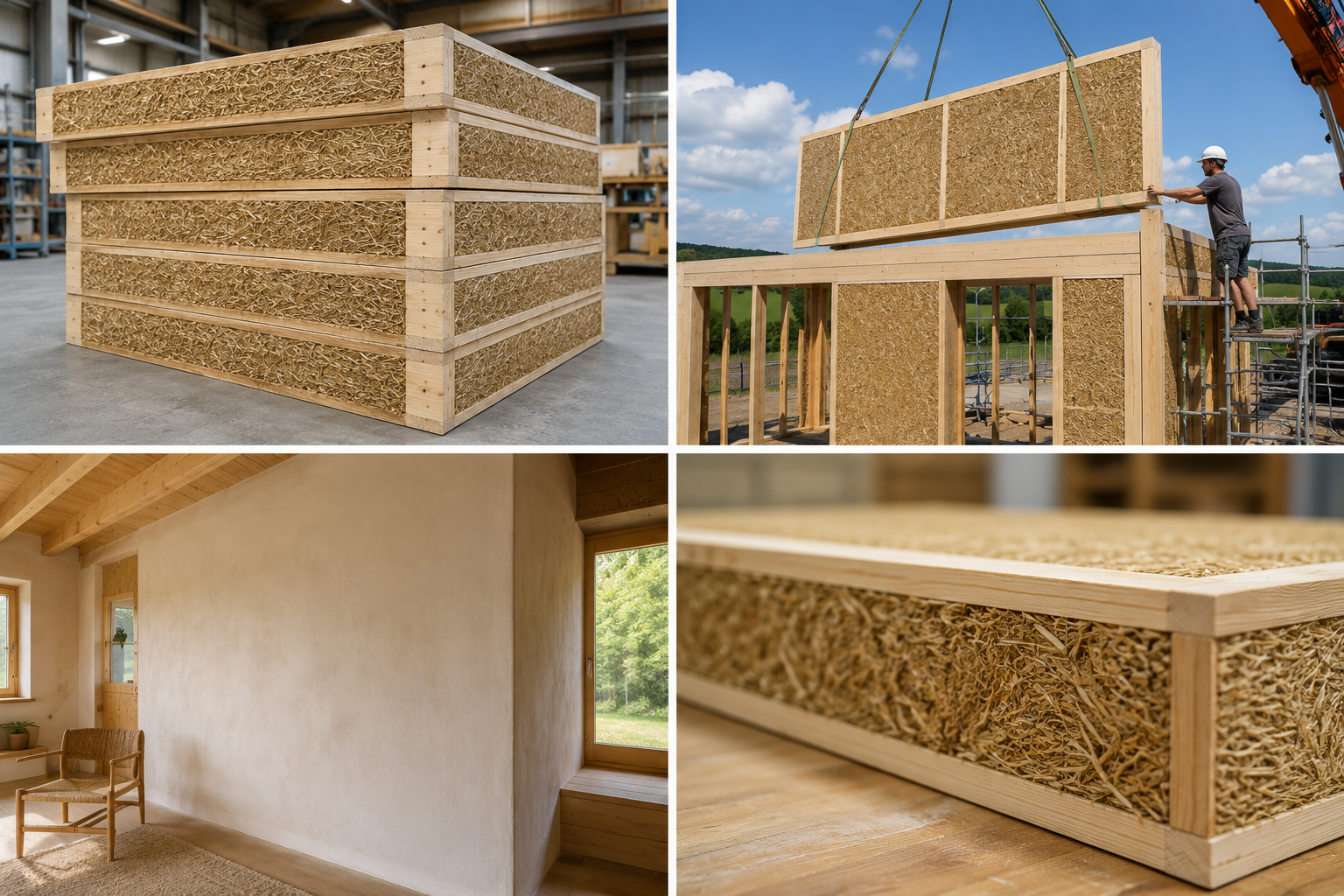
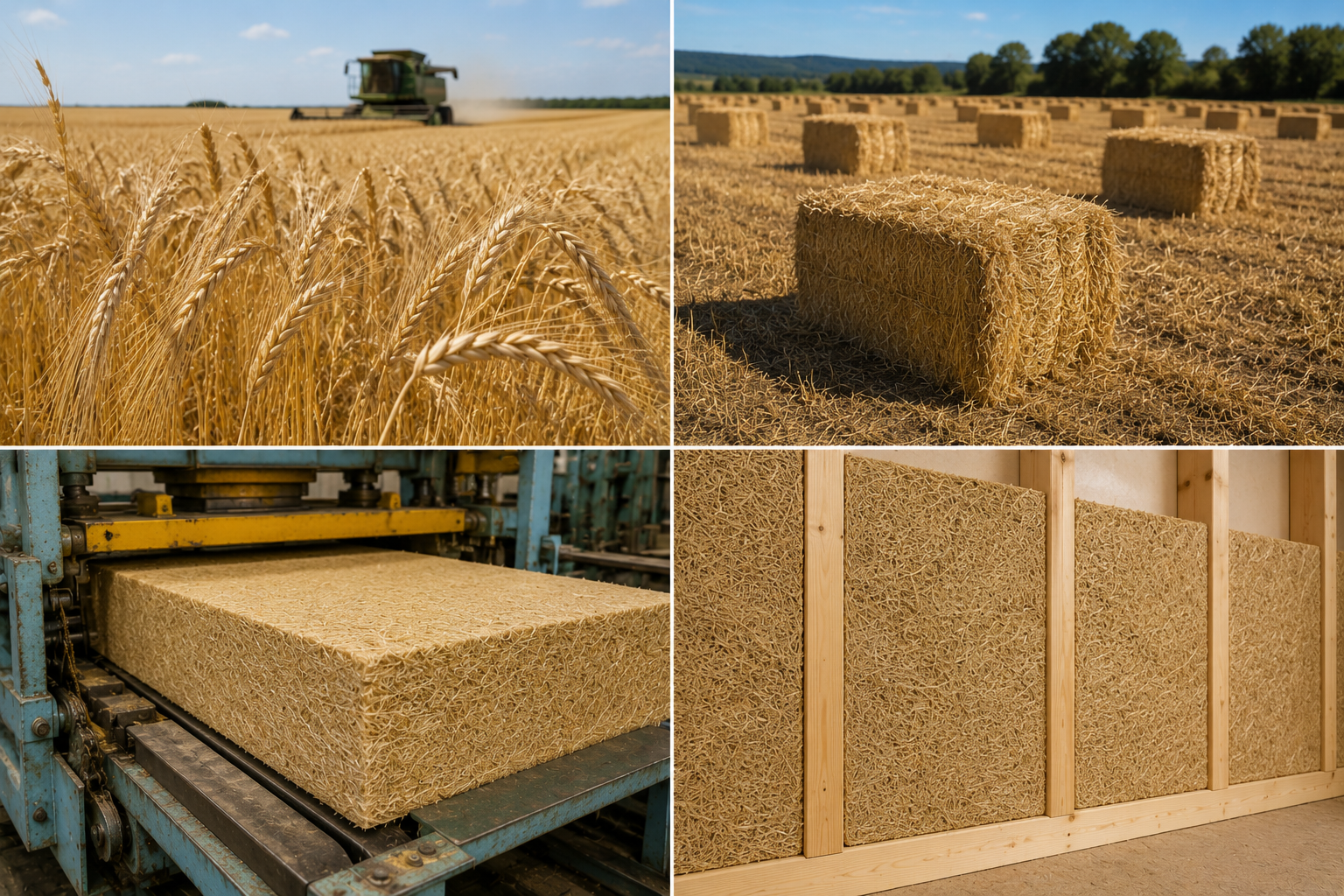
Straw-panel systems take wheat or rice straw — agricultural waste that would otherwise be burned in the field — and compress it inside a timber-framed cassette to form a structural-insulating wall panel. Companies like Ecococon prefabricate these panels in factory-controlled conditions, then ship them to site for crane-set installation, dramatically reducing build time and field-trade exposure. The cured panel performs at roughly R-3.6 per inch, is naturally vapor-open, and is one of the lowest-embodied-carbon wall assemblies on the market — straw stores atmospheric CO₂ for the life of the building, and the timber frame stores more. EBH specified Ecococon panels on the Cereza Project. Properly detailed and protected from bulk water, straw walls last for centuries (look at Nebraska's century-old straw-bale homes for proof).
Composition & Origin
Health Profile — All Endpoints Clear
Severity scored 0–10 against the same 10 hazard endpoints we use for the chemical families on the avoid list. Every score is 1–2 — essentially no signal across every endpoint.
Common Forms & Brands
- Ecococon prefabricated panels (Latvia)
- ModCell straw-bale prefab panel
- STRAMIT straw board
- Common framing: prefabricated cassette panels, site-built straw-bale, straw-clay infill
Why We Use It
- Carbon-negative across full life cycle — straw stores CO₂ permanently
- Vapor-open assembly — wall buffers humidity naturally
- Factory prefabrication = controlled quality, fast site assembly
- Agricultural waste stream that would otherwise be burned
- Naturally insect- and rodent-resistant when dense-packed properly
Where It Performs Best
- Exterior wall assemblies in timber-frame construction
- Roof panel systems where vapor-open assemblies are desired
- Passive House and net-zero residential construction
- Prefabricated factory-built homes
Building Applications for Rice & Wheat Straw Panels
Listed alphabetically. Where in a home this material earns its keep.
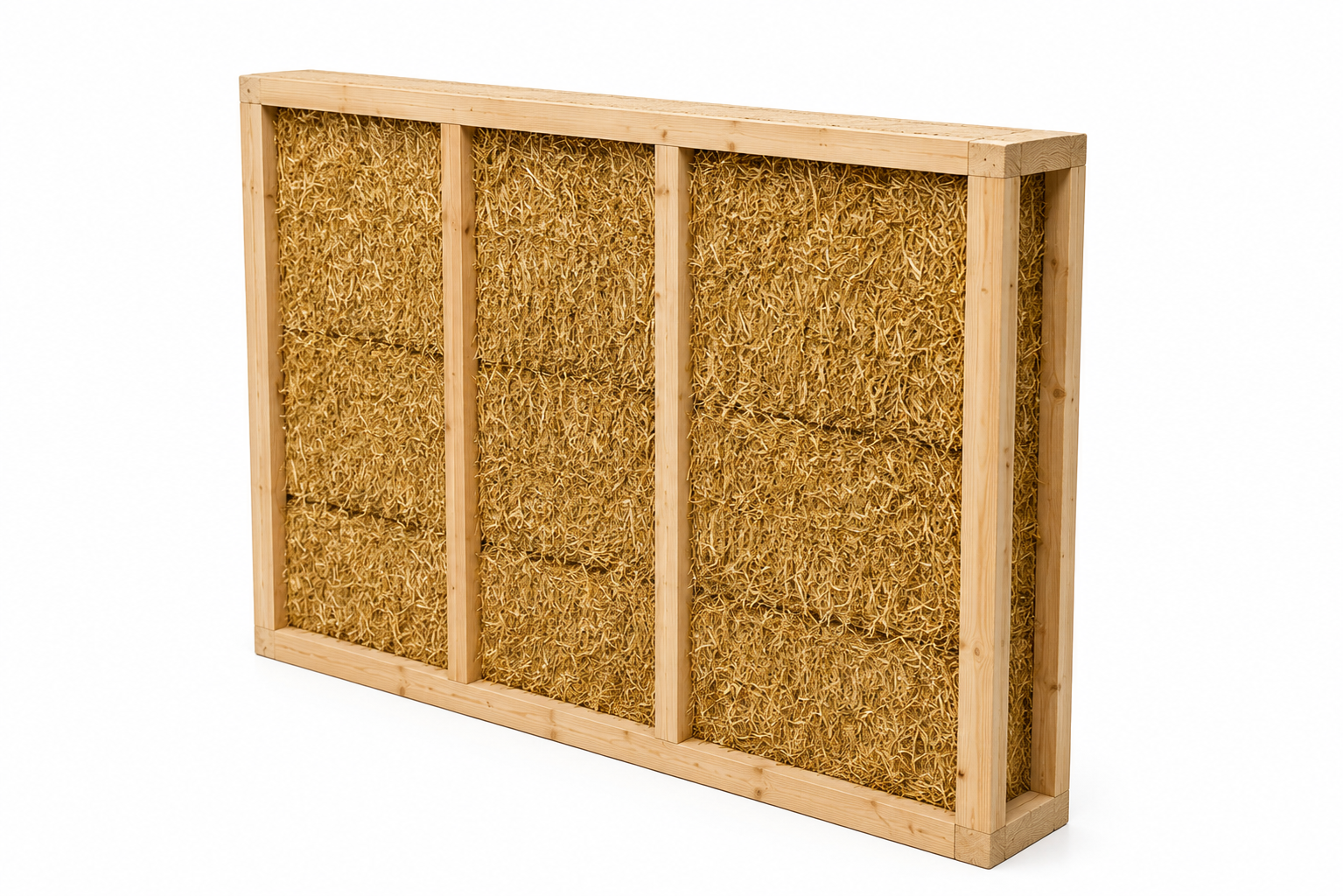 Exterior Wall Cassette Panels
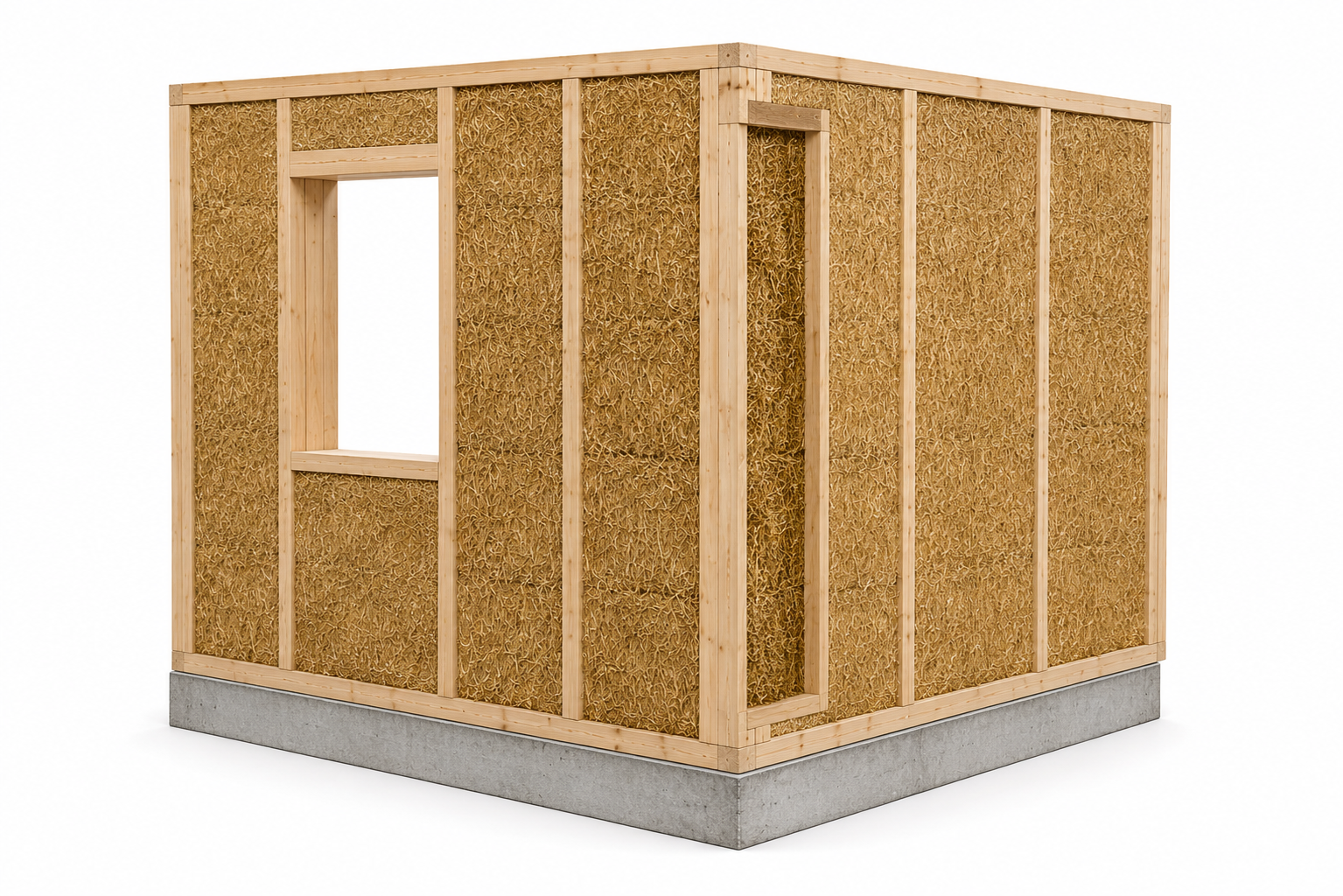 Garage & Outbuilding Walls
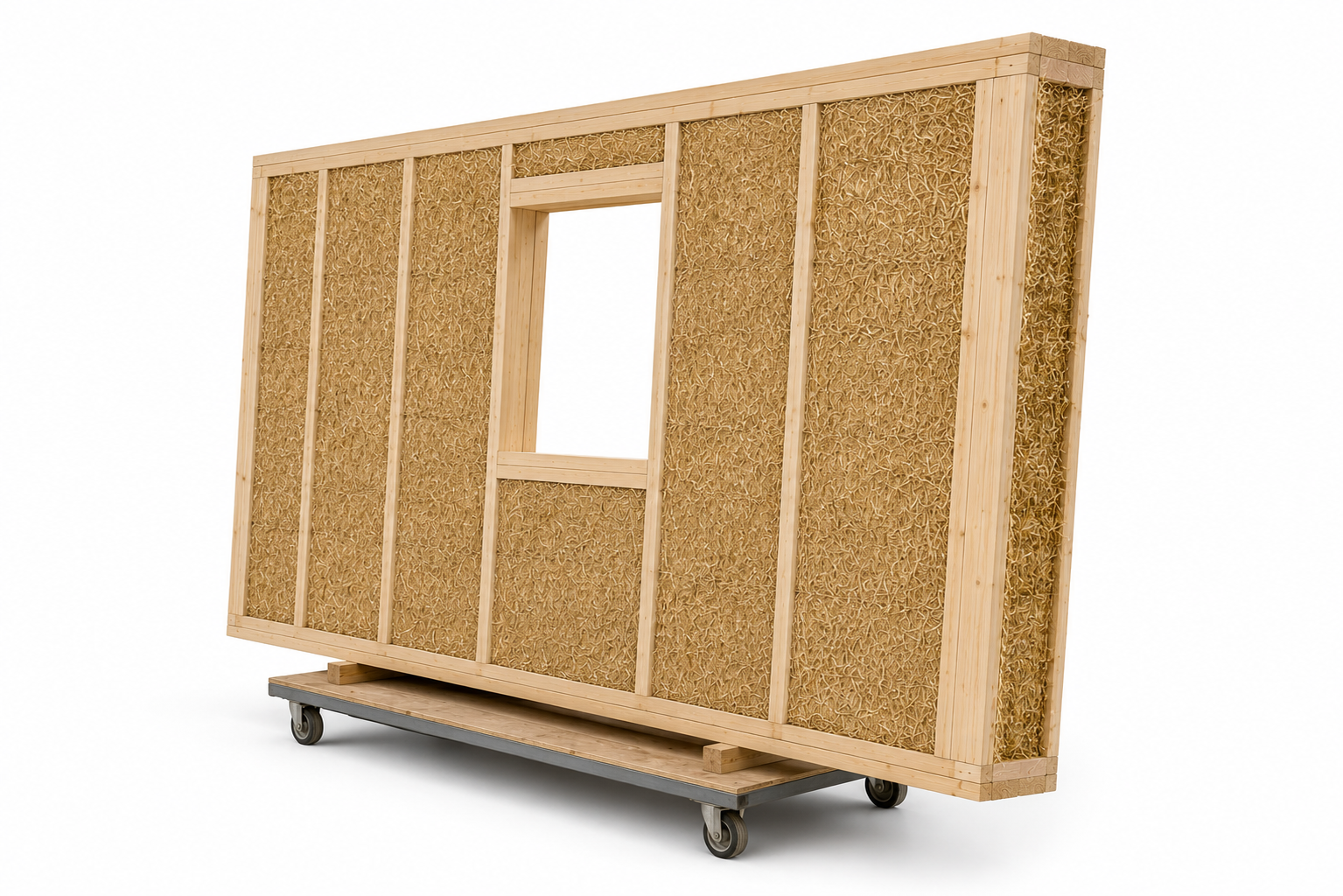 Prefabricated Whole-Home Wall Systems
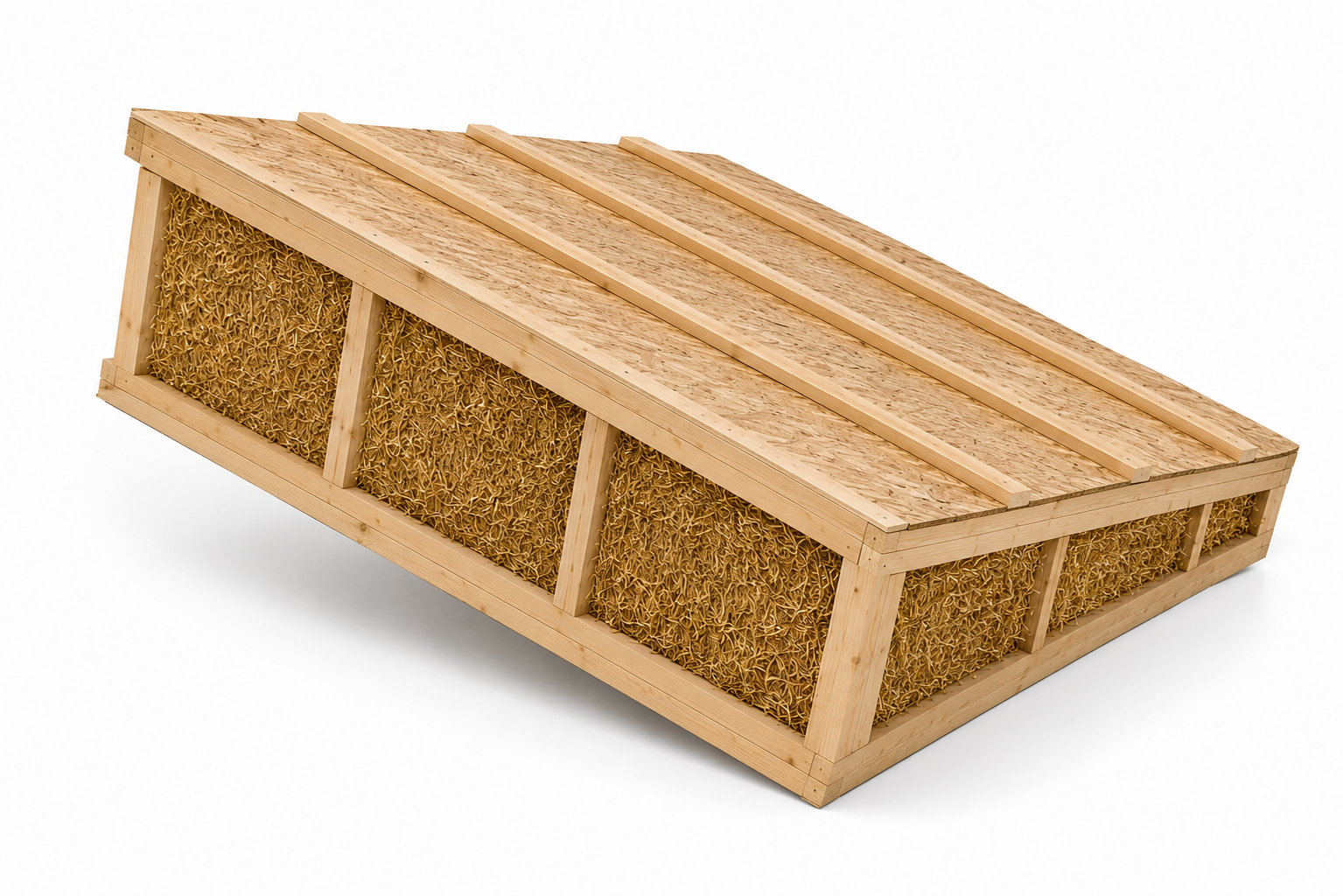 Roof Cassette Panels
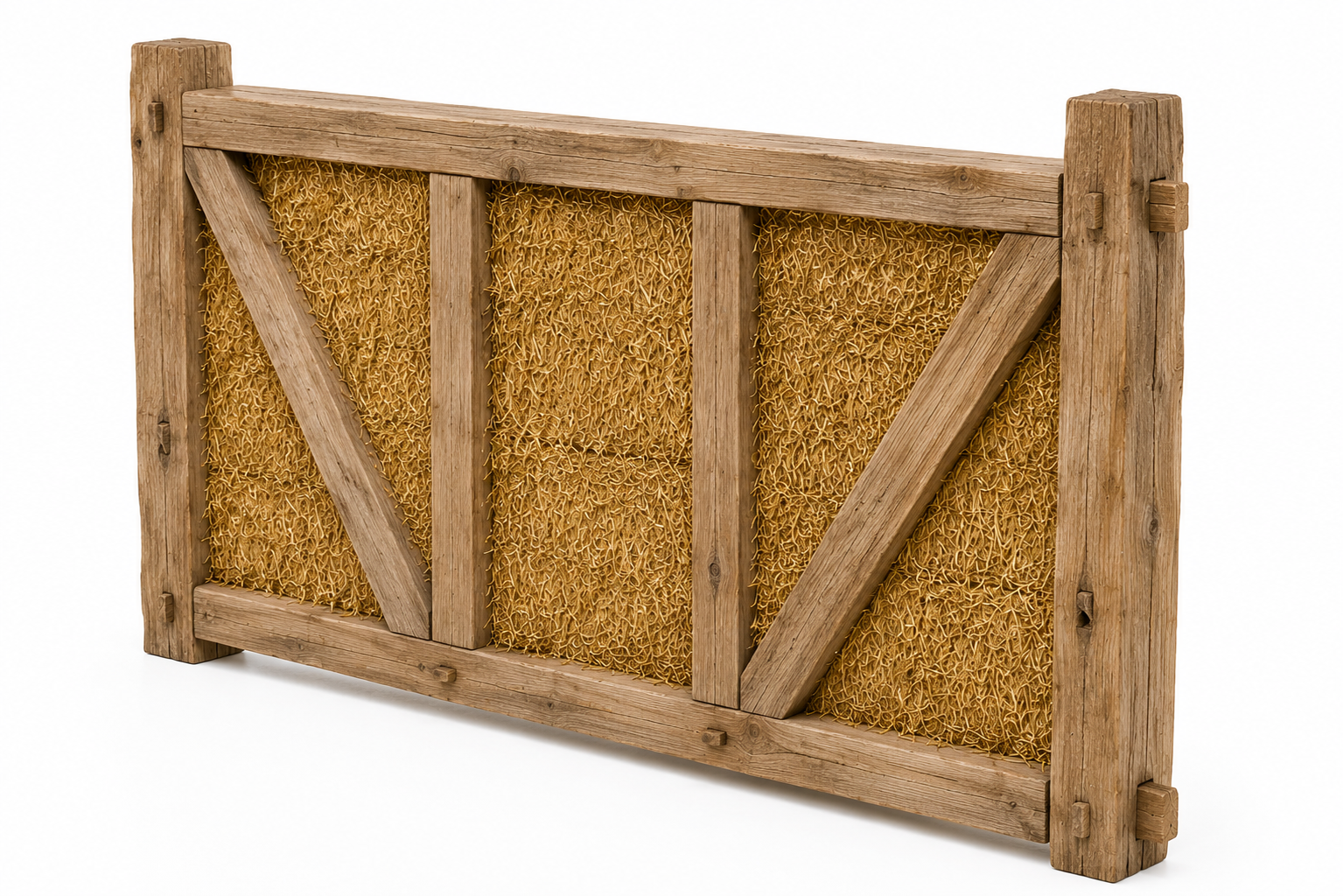 Timber-Frame Wall Infill
Rice & Wheat Straw Panels on a Bay Area Home
Rice & Wheat Straw Panels shows up on our zero energy homes for a reason. An all electric house with a very small heating load only works if the envelope is right, and the envelope is only as good as the materials you are willing to put in it.
If you are planning a new house or a deep remodel and you want this level of material control, that is the whole job we do. Earth Bound Homes builds in Los Gatos, San Jose, Santa Clara County and across the San Francisco Bay Area.
Related materials we specify
- Cellulose Insulation
- Cork Insulation
- Mineral Wool - Formaldehyde Free Only
- Pumice & Volcanic Aggregate Insulation