Reclaimed & Salvaged Wood
Old-growth lumber rescued from demolition — embodied carbon is already paid; the building stores it again.
Toxicity Screening — All Clear
This material screens clear across all nine independent toxicology authorities we use on every project.
Material Type
Salvaged Solid Wood
Material Description
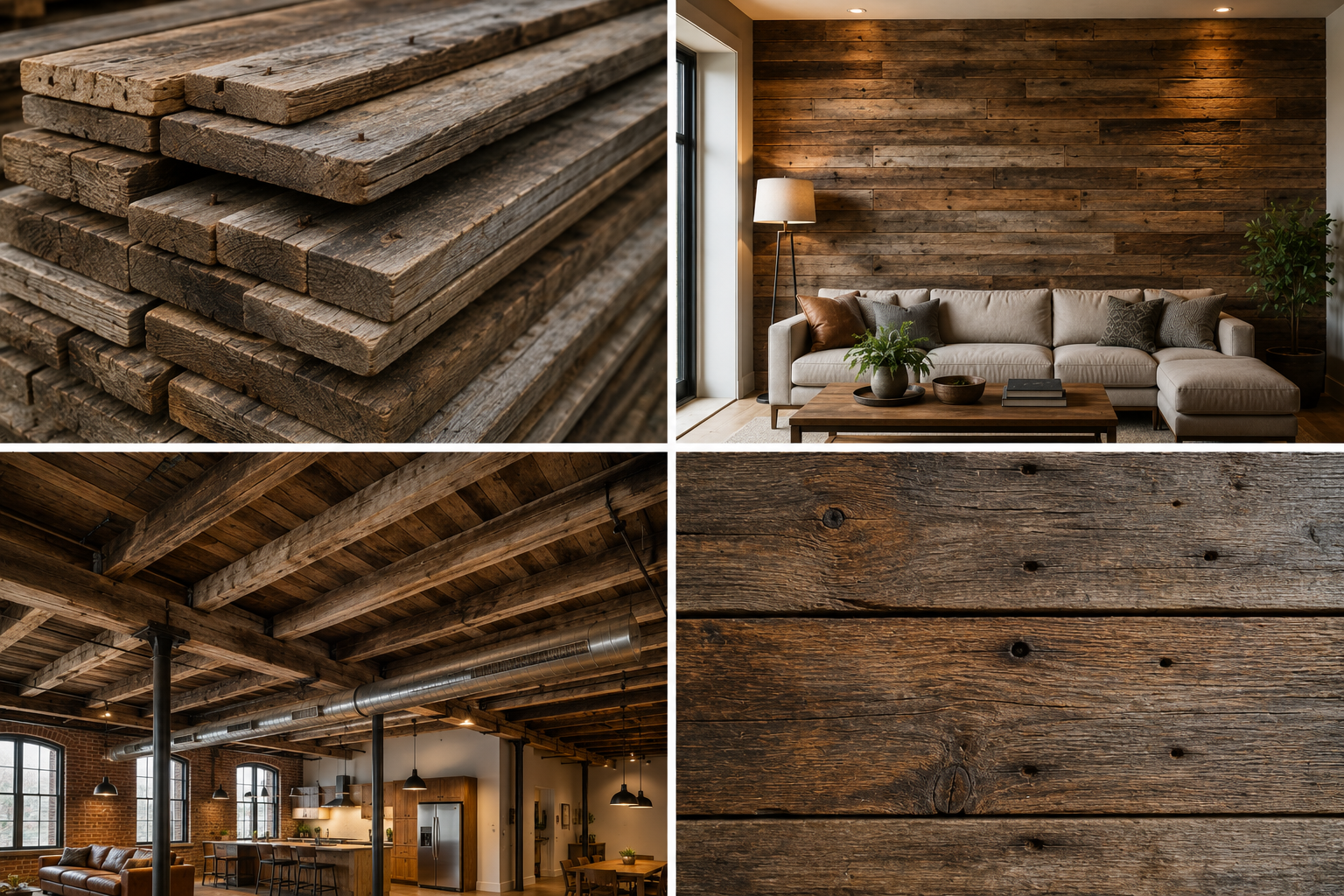
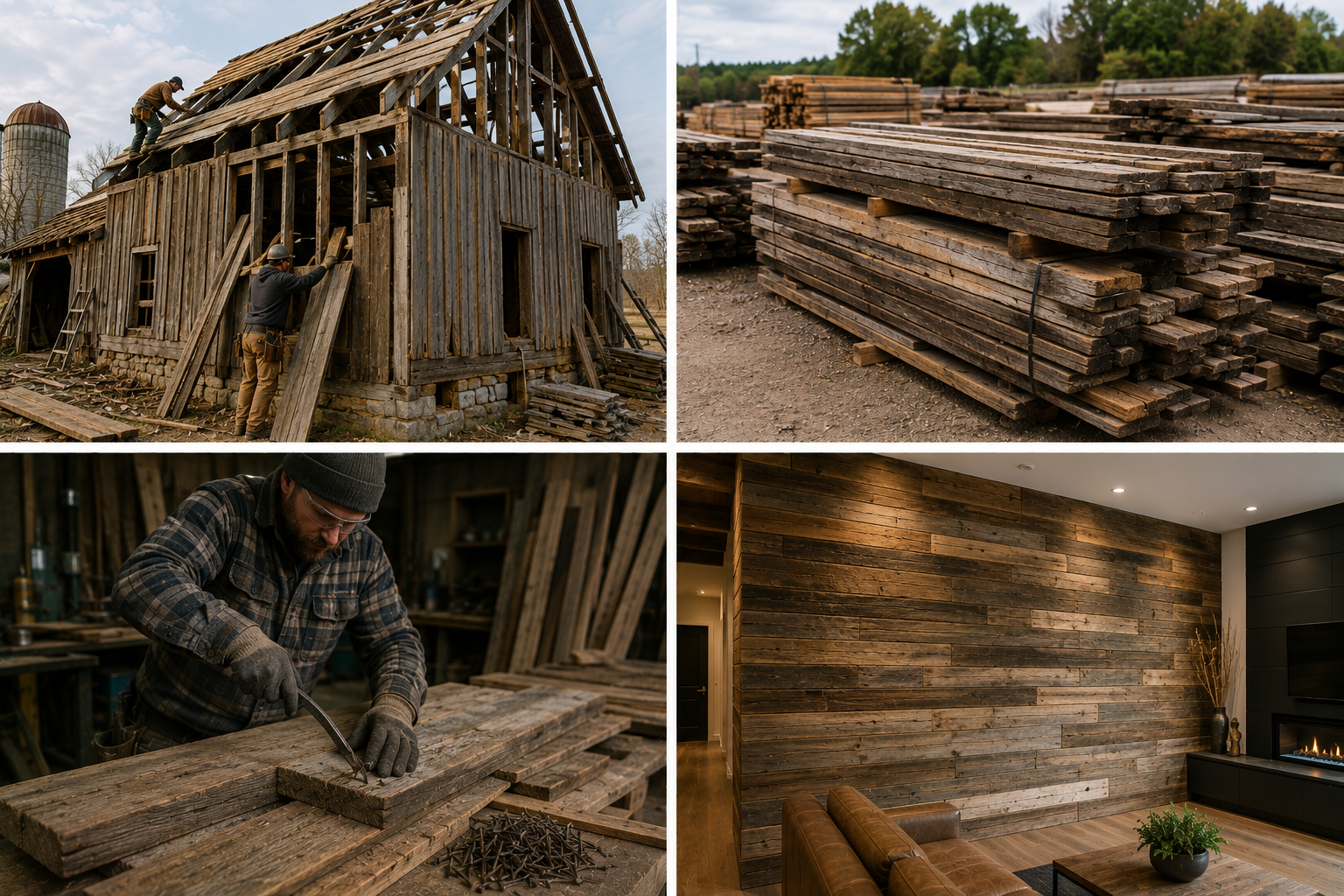
Reclaimed wood is solid timber pulled from buildings, barns, factories, and infrastructure at end of service life, then re-milled for a second use. The advantage is twofold: old-growth wood tends to be denser, more dimensionally stable, and more rot-resistant than modern fast-growth lumber, and the embodied carbon was paid generations ago — keeping that wood in the building stock continues to store the carbon rather than releasing it through demolition combustion or landfill decomposition. The caveat is testing: pre-1990 utility-pole, railroad-tie, or industrial stock may have been treated with CCA arsenic, pentachlorophenol, or creosote. EBH only uses reclaimed wood with documented provenance and lab-tested heavy-metal / chlorinated-phenol clearance.
Composition & Origin
Health Profile — All Endpoints Clear
Severity scored 0–10 against the same 10 hazard endpoints we use for the chemical families on the avoid list. Every score is 1–2 — essentially no signal across every endpoint.
Common Forms & Brands
- Barnwood, factory-floor maple, longleaf-pine joists
- Antique heart pine, salvaged Douglas fir, reclaimed white oak
- Common framing: re-milled flooring, decorative beams, accent walls
Why We Use It
- Zero new-tree harvest — extends carbon storage already paid
- Old-growth density and stability superior to fast-growth lumber
- Character and patina that new lumber cannot match
- Lower embodied carbon than any virgin-wood product
- Must be tested if source is pre-1990 industrial/agricultural
Where It Performs Best
- Plank flooring (re-milled)
- Decorative ceiling beams and trusses
- Accent and feature walls
- Cabinetry door fronts and panels
Building Applications for Reclaimed & Salvaged Wood
Listed alphabetically. Where in a home this material earns its keep.
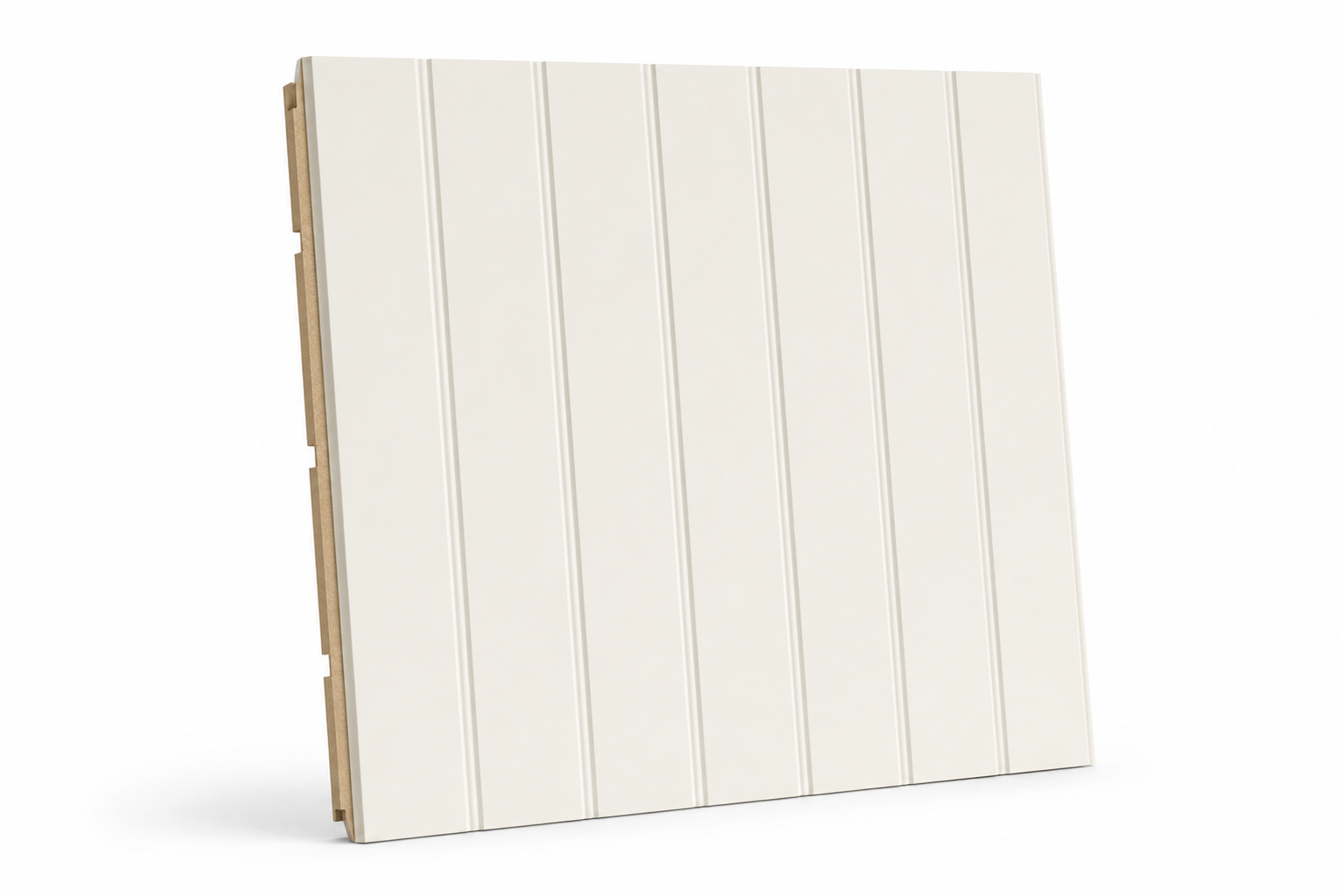 Accent Walls & Wainscot
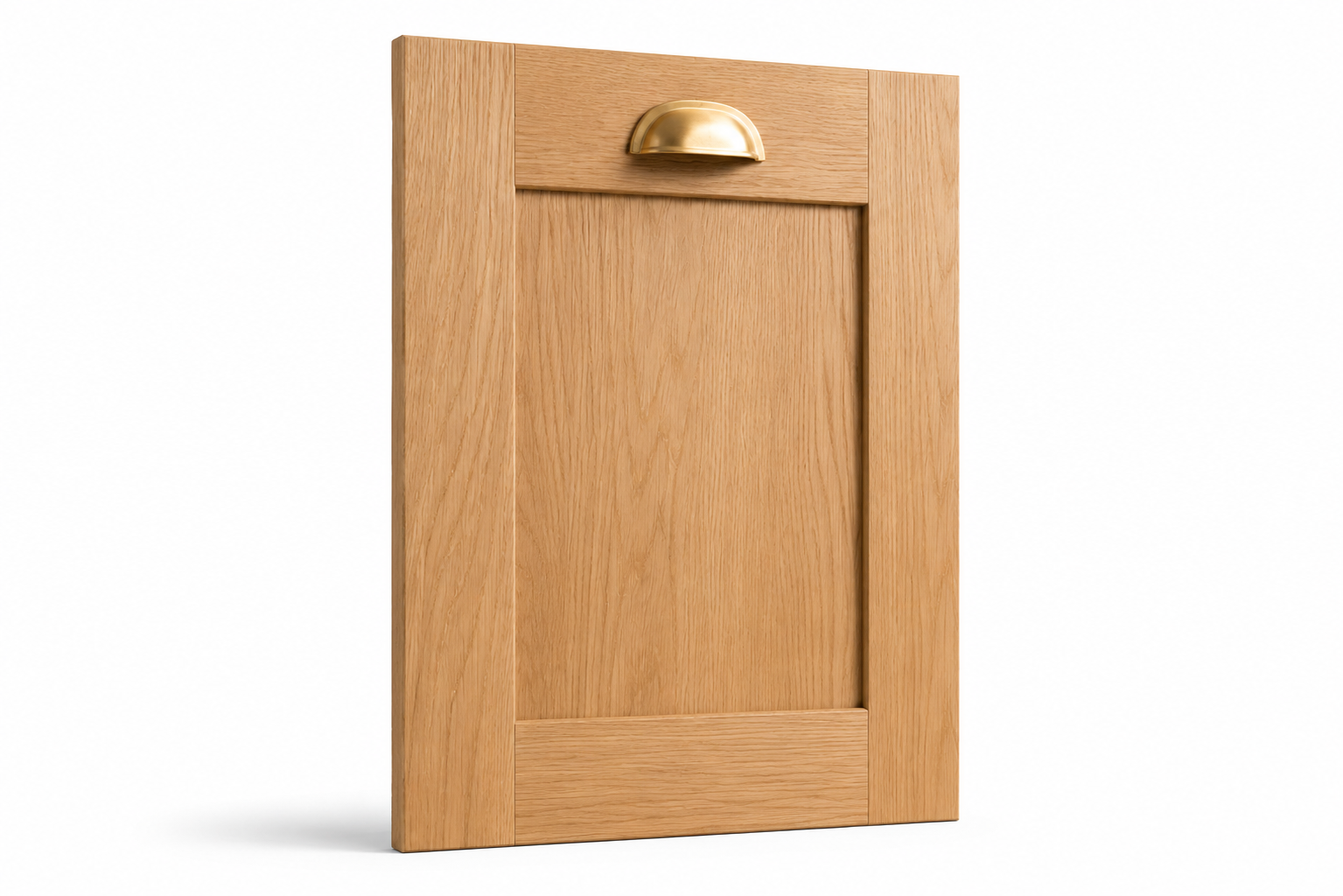 Cabinet Door Fronts
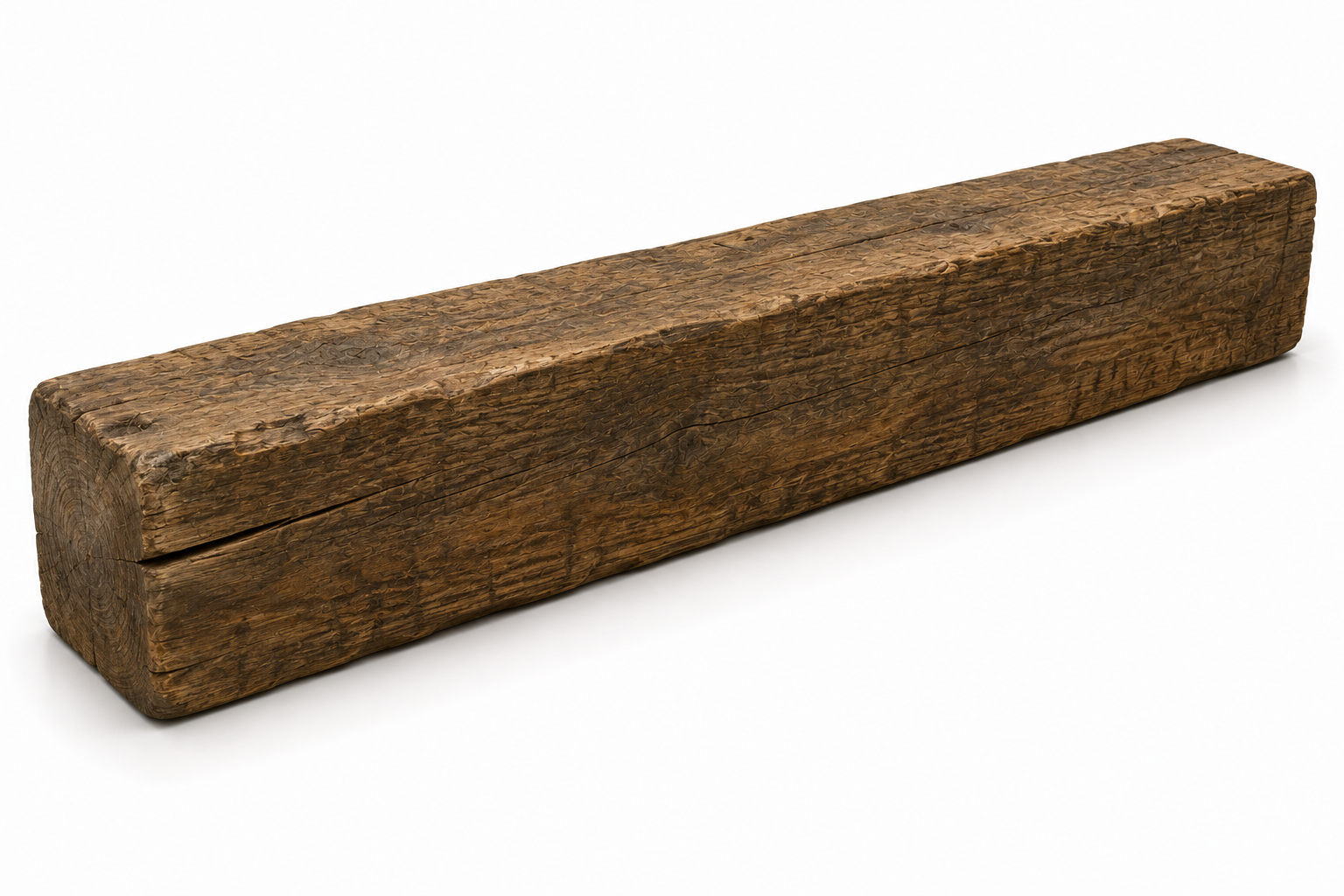 Decorative Ceiling Beams
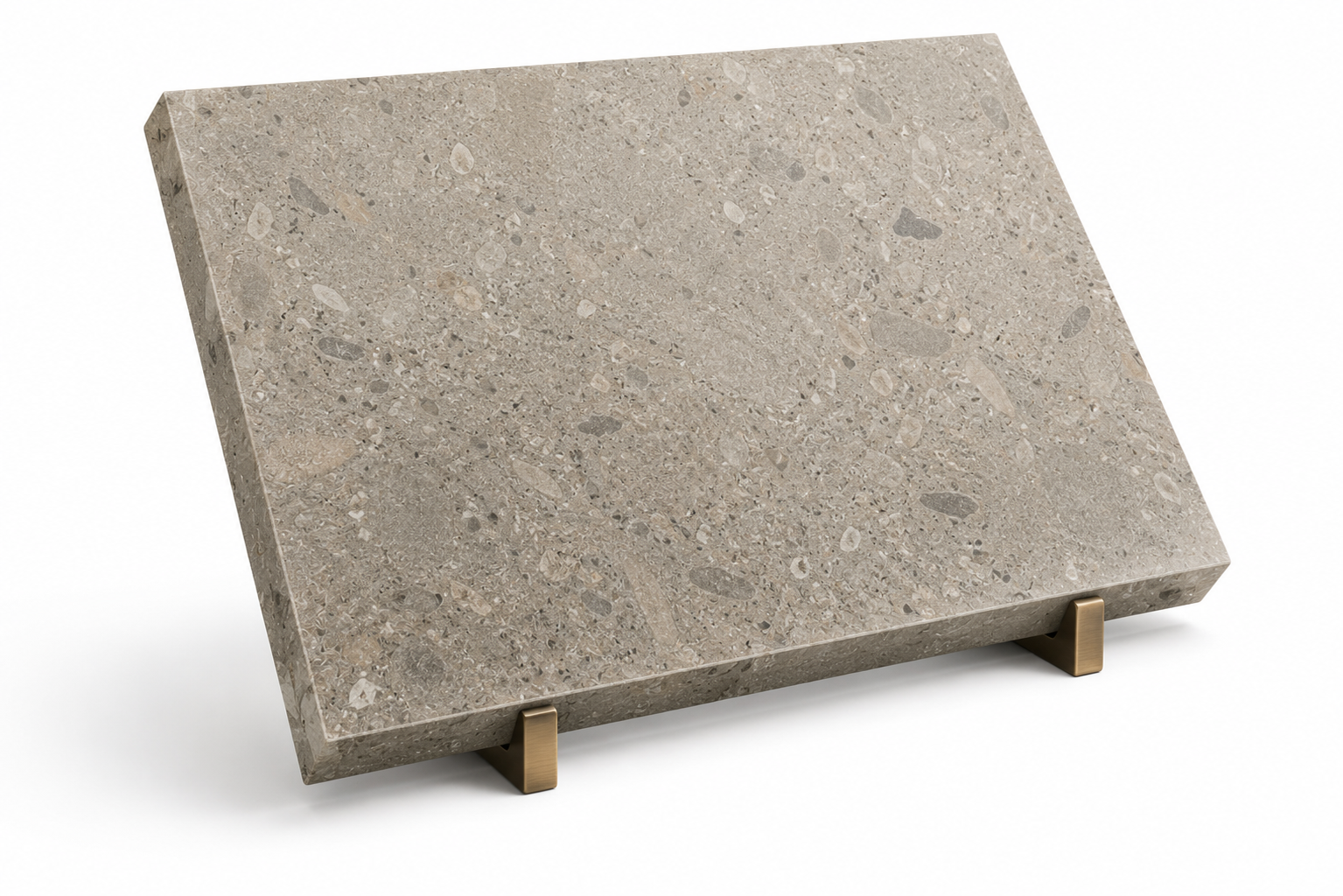 Mantels, Bartops, & Shelving
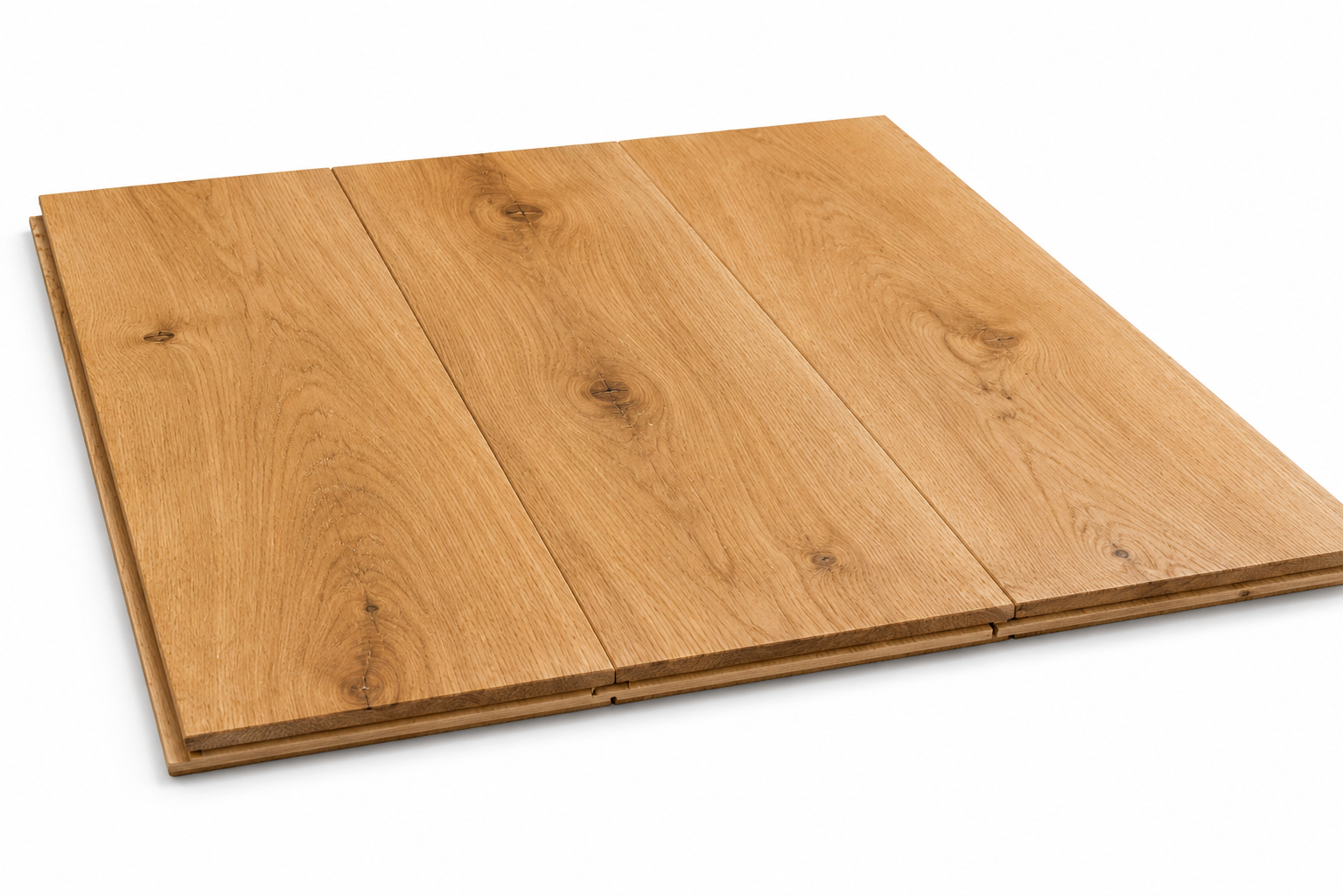 Reclaimed Plank Flooring
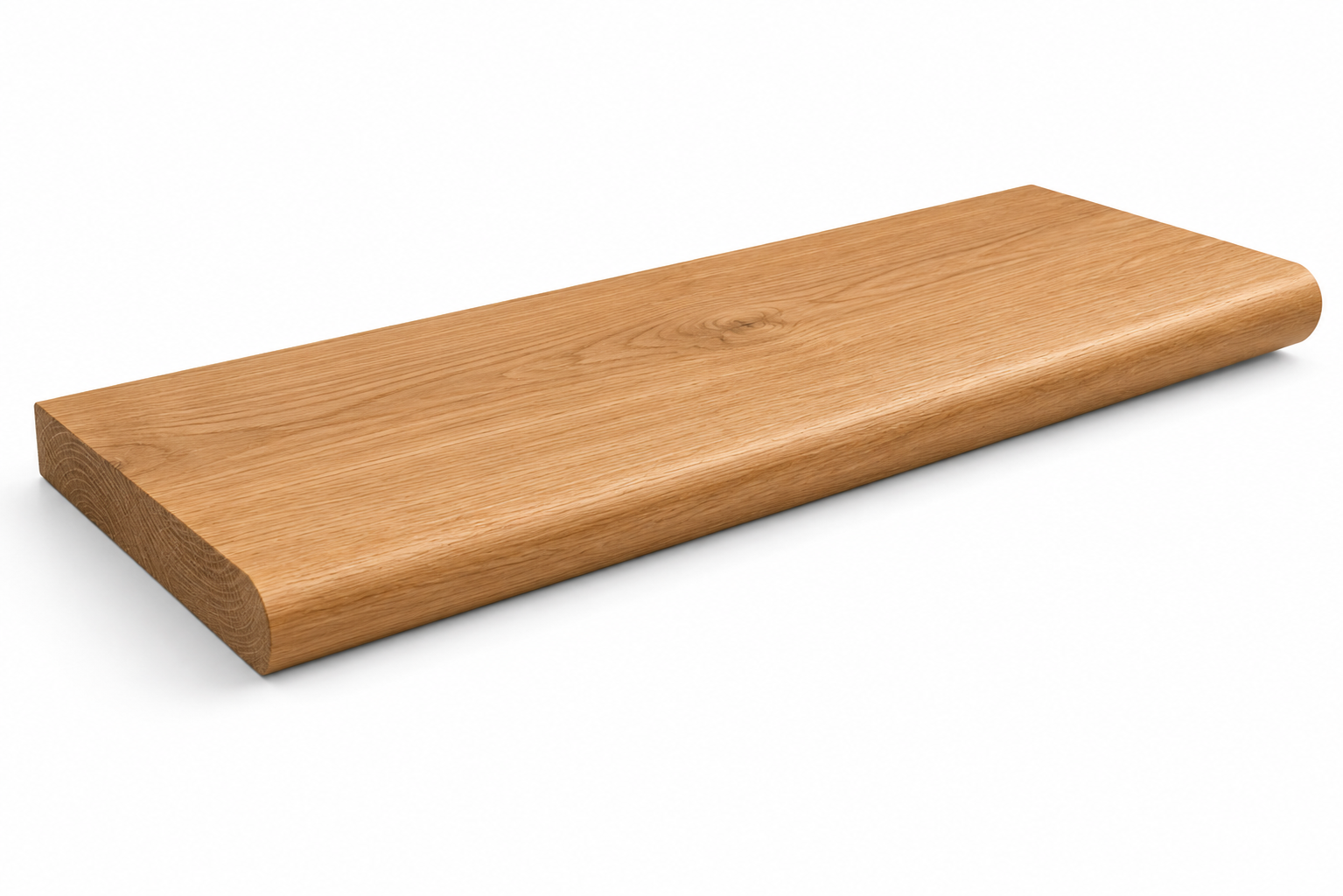 Stair Treads & Risers
Reclaimed & Salvaged Wood on a Bay Area Home
Reclaimed & Salvaged Wood is one of the materials we actually install. Every product that reaches an Earth Bound Homes jobsite is screened against nine independent toxicology databases first, so the healthy home we hand over is healthy in the walls, not just on the brochure.
If you are planning a new house or a deep remodel and you want this level of material control, that is the whole job we do. Earth Bound Homes builds in San Jose, Los Gatos, Santa Clara County and across the San Francisco Bay Area.