70% Replacement Concrete
Portland cement replaced 70% with slag and fly ash — embodied carbon cut nearly in half, no performance penalty.
Toxicity Screening — All Clear
This material screens clear across all nine independent toxicology authorities we use on every project.
Material Type
Supplementary Cementitious Material (SCM) Concrete
Material Description
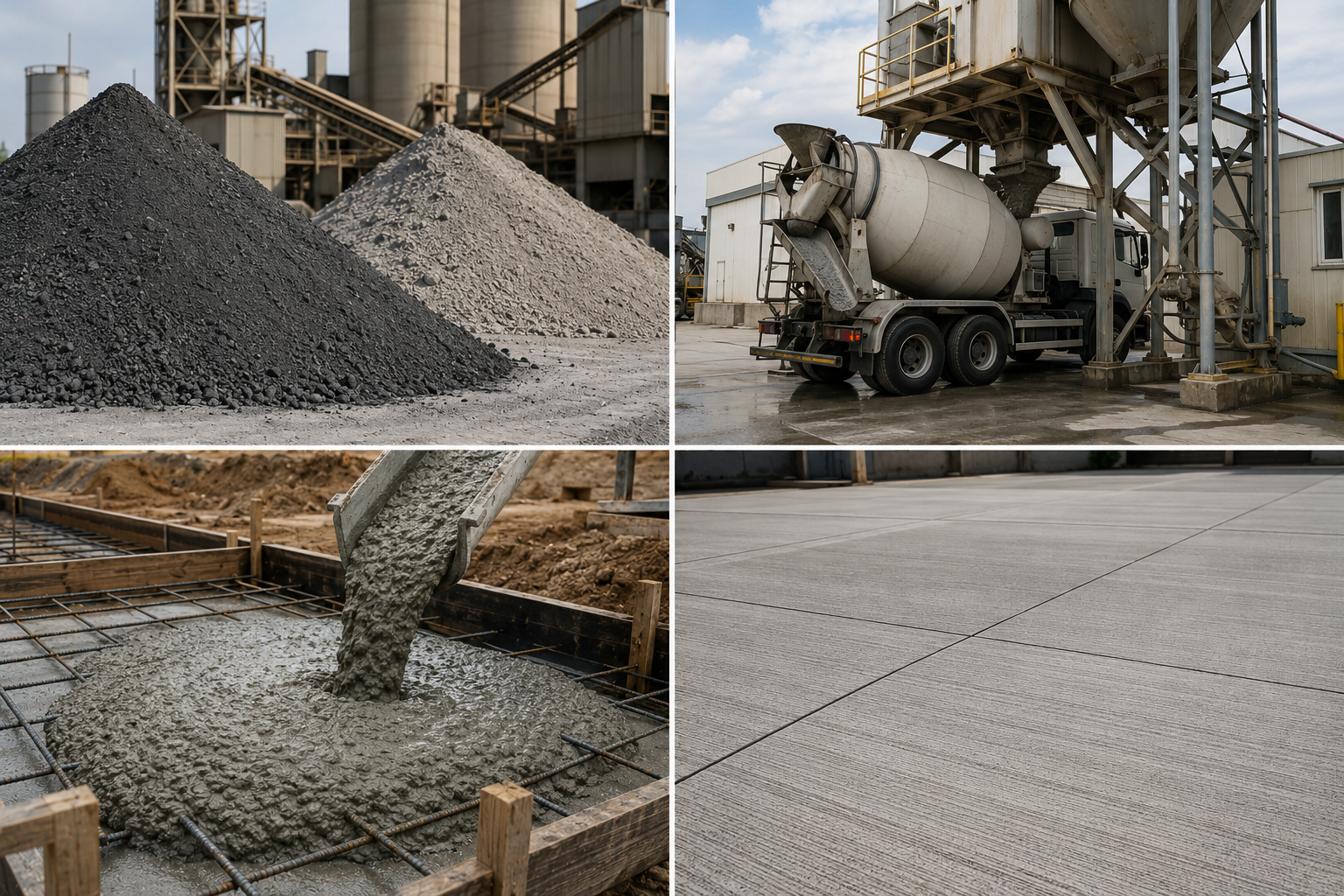
Portland cement manufacturing accounts for ~8% of global CO₂ emissions, dwarfing every other single-product source in construction. The fix is straightforward: replace a large fraction of the Portland with industrial byproducts that hydraulically activate the same way — ground-granulated blast-furnace slag (GGBFS) and fly ash from coal combustion. A 70% Portland replacement mix cuts embodied carbon roughly in half without sacrificing structural performance — in many applications it actually delivers higher long-term strength, lower permeability, and better sulfate resistance than 100%-Portland concrete. Fly ash carries trace heavy metals from its coal-combustion origin; specify Class F fly ash from sources with documented metal-content testing and the trace exposure stays well below concern thresholds in cured concrete.
Composition & Origin
Health Profile — All Endpoints Clear
Severity scored 0–10 against the same 10 hazard endpoints we use for the chemical families on the avoid list. Every score is 1–2 — essentially no signal across every endpoint.
Common Forms & Brands
- Heidelberg Materials EcoCem
- Holcim ECOPact range
- CarbonCure-injected mix designs
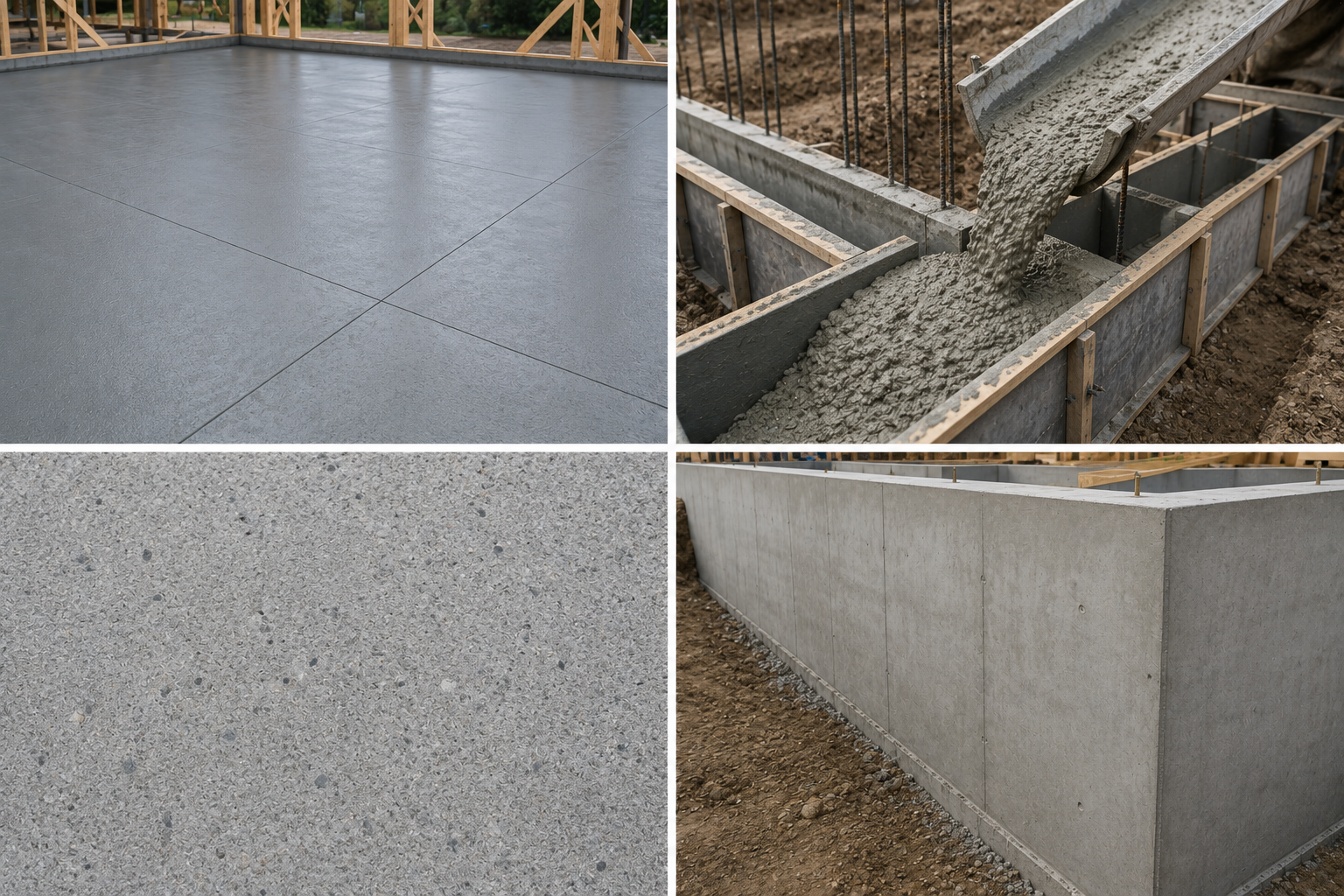
- Common framing: foundation pours, slabs-on-grade, structural columns, walls
Why We Use It
- Embodied carbon roughly half of 100%-Portland concrete
- Uses industrial byproducts that would otherwise be landfilled
- Higher long-term compressive strength than equivalent Portland mix
- Lower permeability — better sulfate and chloride resistance
- Specify Class F fly ash with metals testing for indoor uses
Where It Performs Best
- Foundation footings and walls
- Slab-on-grade floors
- Driveway and exterior paving
- Structural concrete columns and shear walls
Building Applications for 70% Replacement Concrete
Listed alphabetically. Where in a home this material earns its keep.
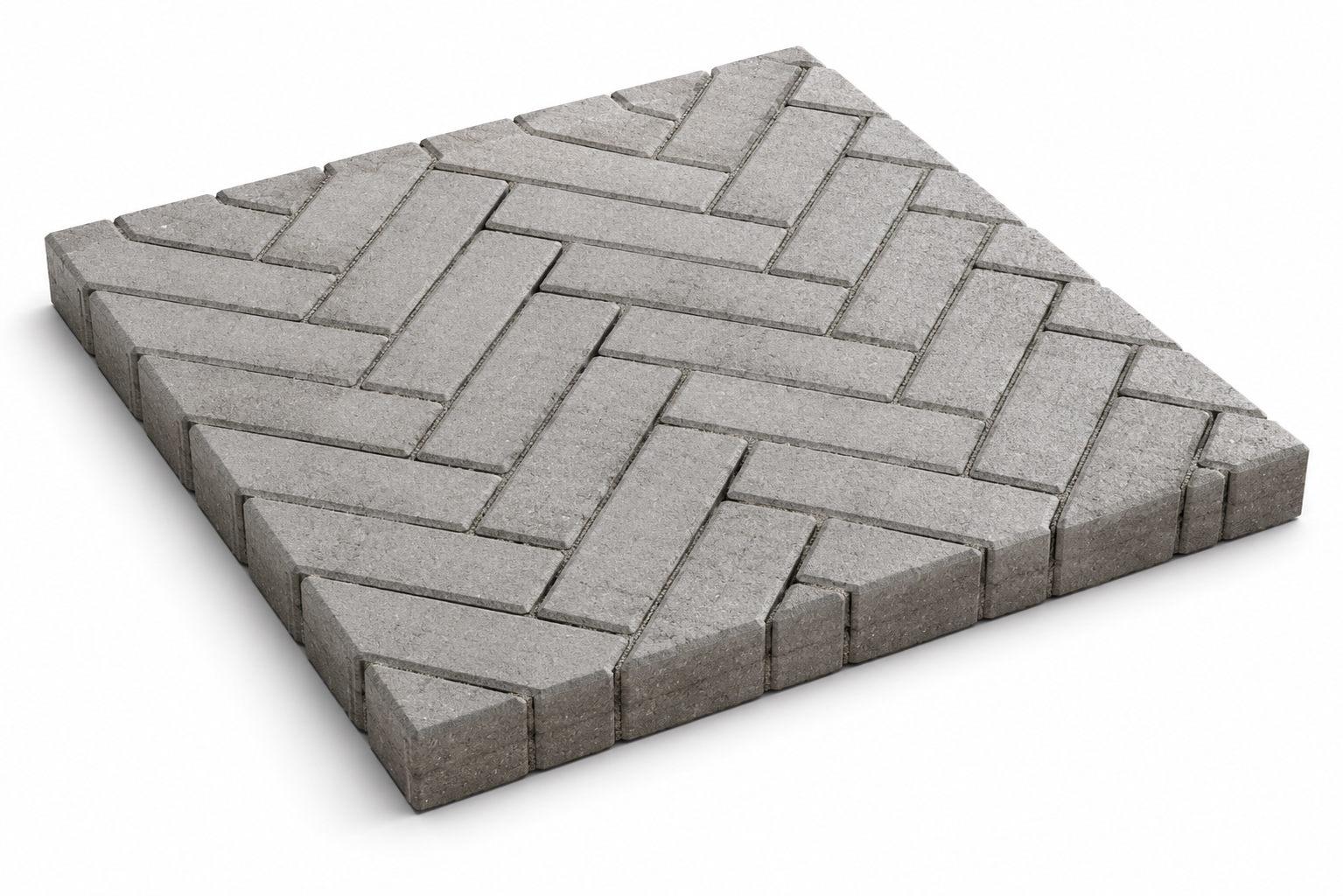 Driveway & Paving Slabs
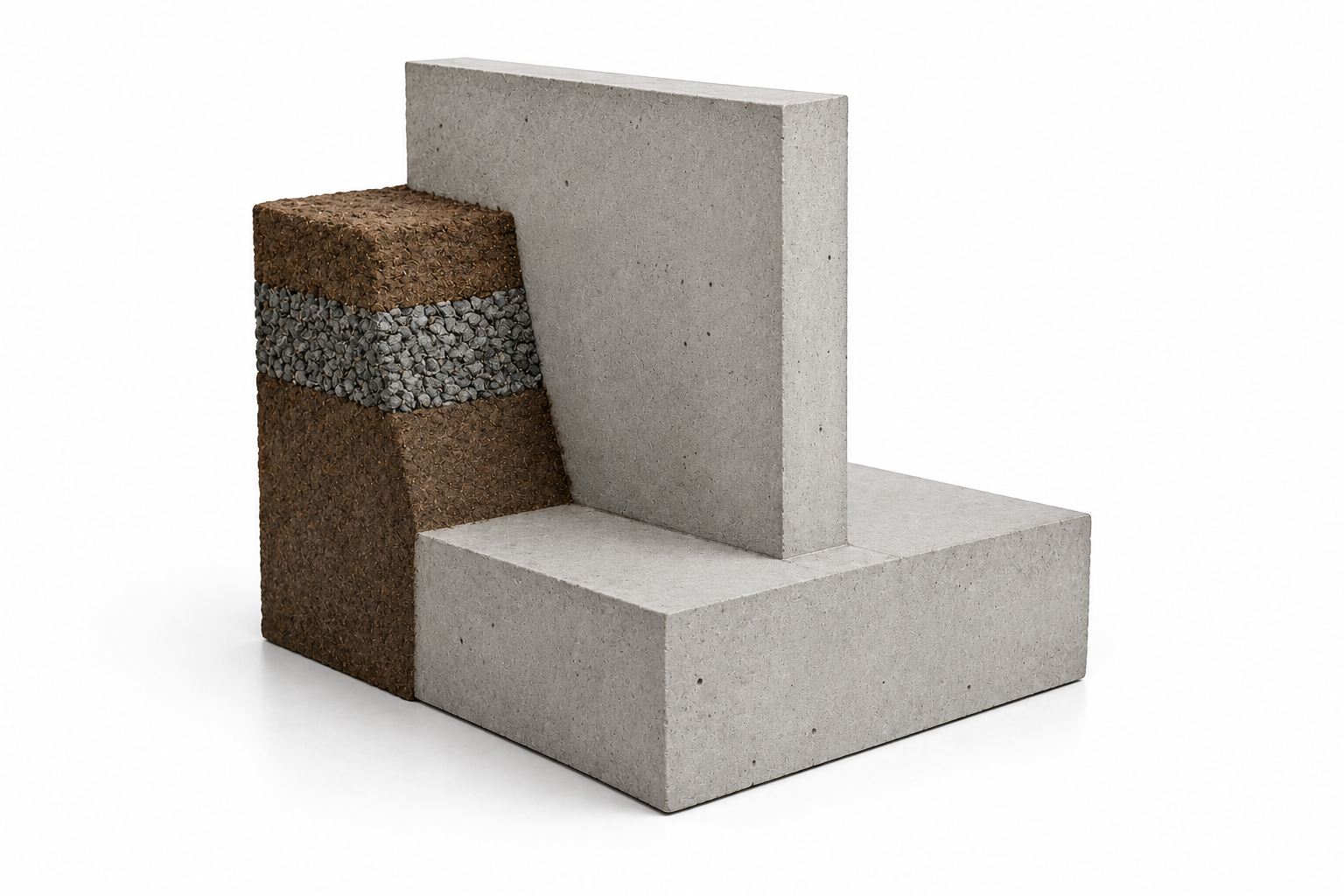 Foundation Walls & Footings
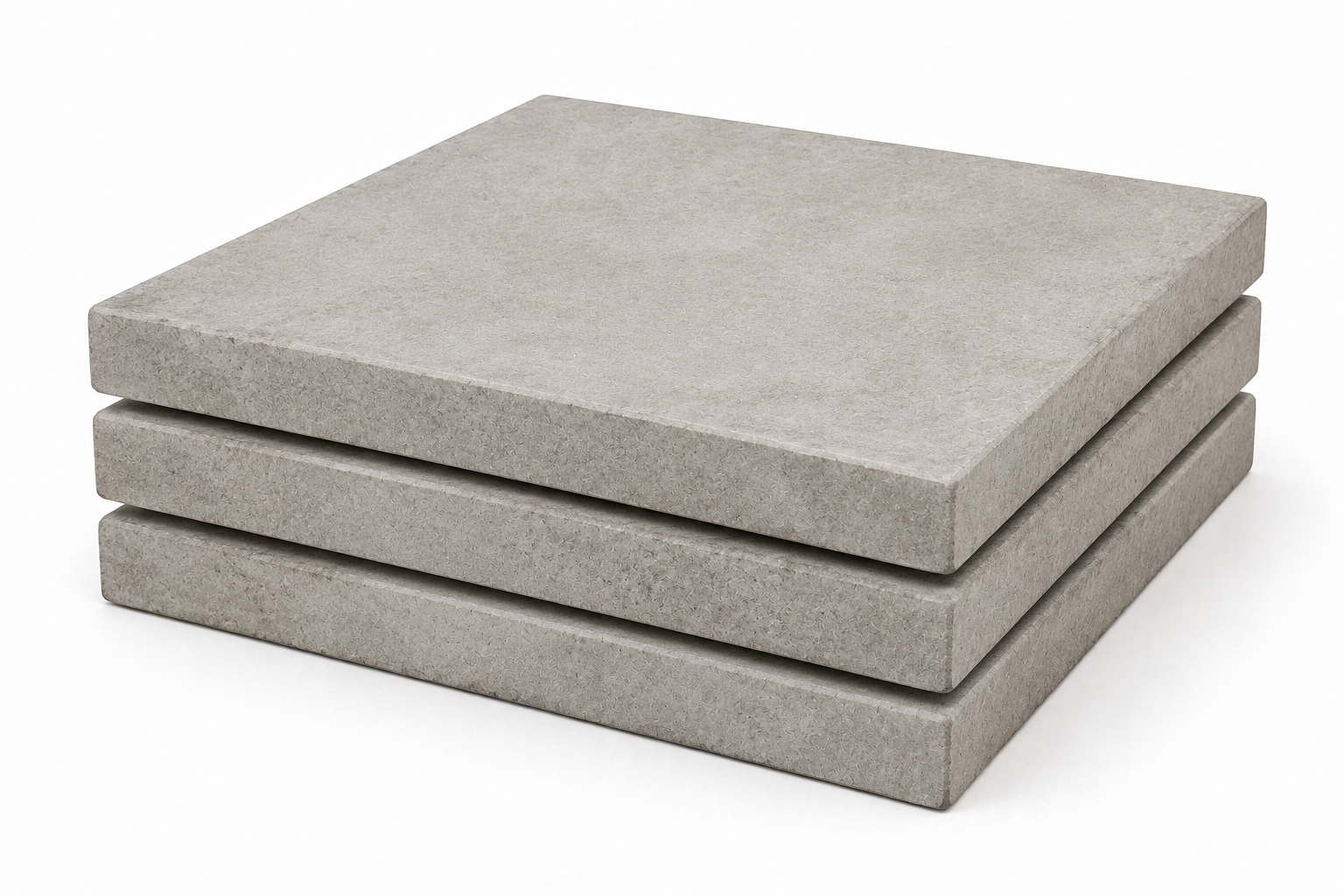 Patio Slabs
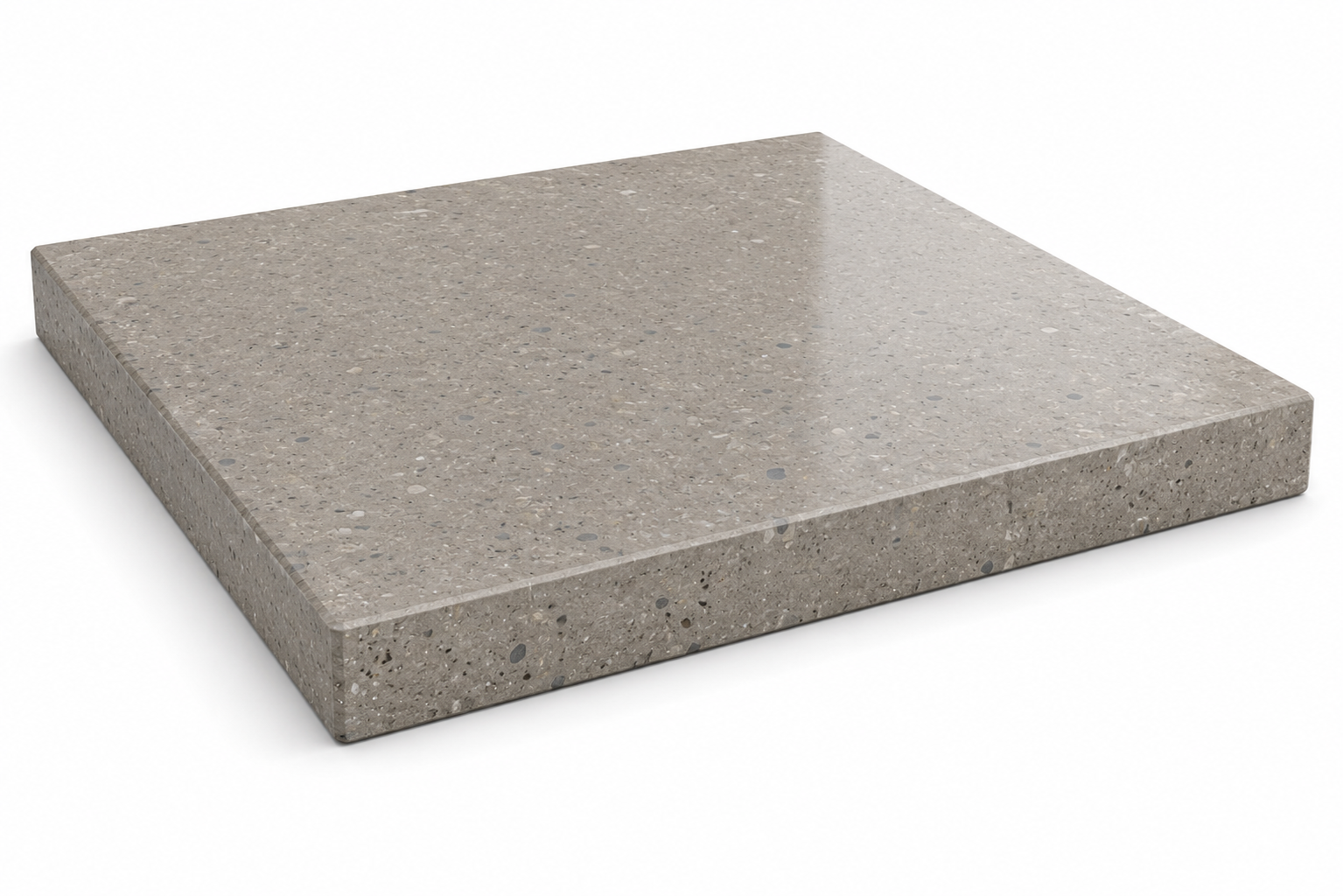 Slab-on-Grade Floors
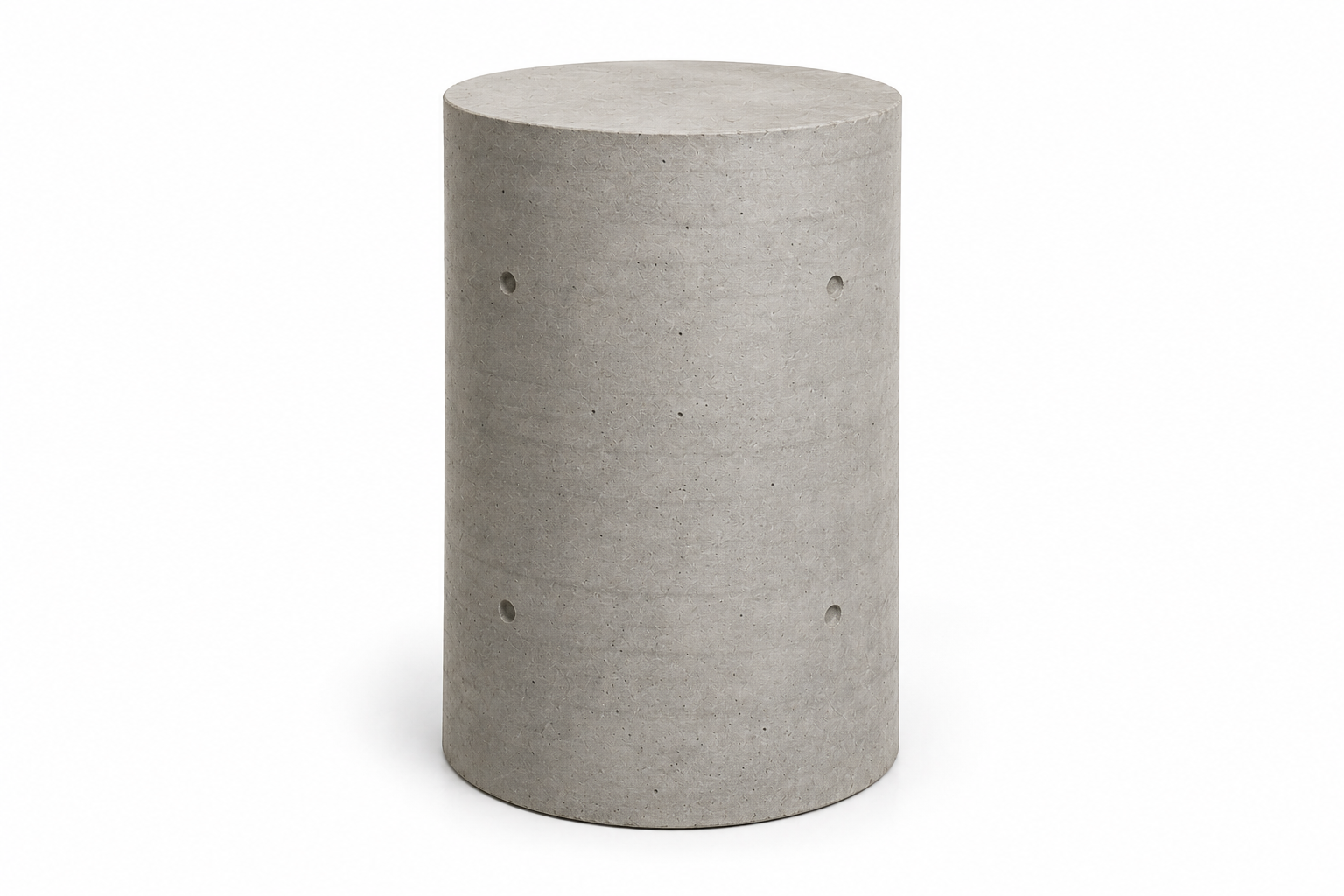 Structural Concrete Columns
70% Replacement Concrete on a Bay Area Home
70% Replacement Concrete is part of how we build a sustainable home that is also a comfortable one. Our wall and roof assemblies are modeled in PHPP before anything is ordered, so insulation, cladding and finish all have to perform together.
If you are planning a new house or a deep remodel and you want this level of material control, that is the whole job we do. Earth Bound Homes builds in Palo Alto, Atherton, Menlo Park and across the San Francisco Bay Area.