Meet Formaldehyde: A Deceptively Simple Threat
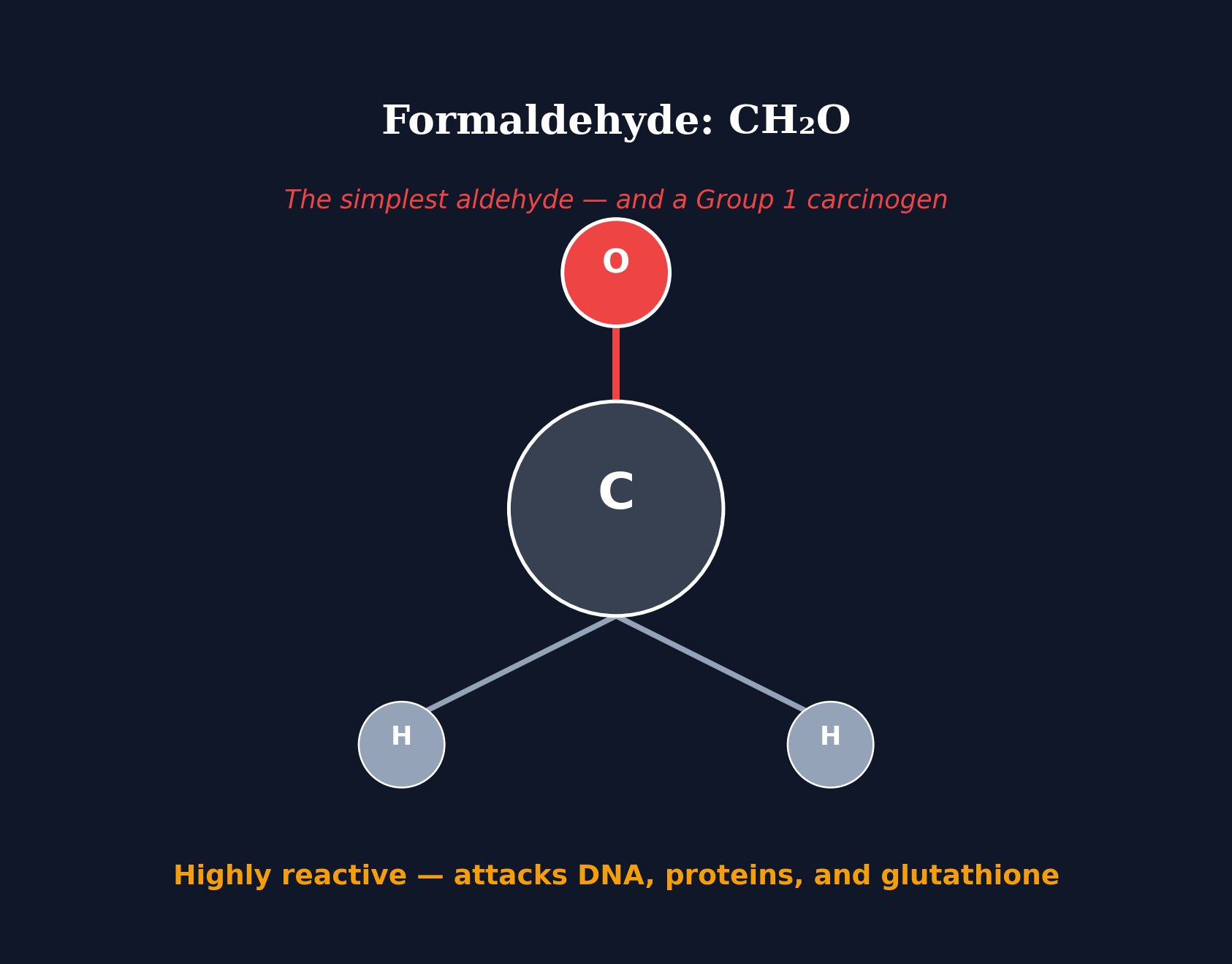
Formaldehyde is one of the simplest organic chemicals—just a carbon atom double-bonded to oxygen (CH₂O). Yet this molecular simplicity belies its remarkable reactivity and toxicity. The carbon-oxygen double bond makes formaldehyde a powerful electrophile, meaning it actively seeks out and attacks electron-rich targets throughout your body.
Formaldehyde's targets are the molecules that keep you alive: DNA bases that encode your genetic information, amino groups in proteins that perform nearly every biological function, and glutathione, your body's most important antioxidant defense system. When formaldehyde attacks these targets, it causes DNA damage, protein dysfunction, and oxidative stress that cascades through your body's systems.
The chemical's danger is recognized at the highest levels of health authority. The International Agency for Research on Cancer (IARC) classifies formaldehyde as a Group 1 carcinogen—the same classification applied to asbestos, tobacco smoke, and ionizing radiation. This classification means there is sufficient evidence that formaldehyde causes cancer in humans. It is not a probable carcinogen or a "possible" carcinogen; it is a confirmed human carcinogen.
DNA Cross-Linking: How Formaldehyde Rewrites Your Genetic Code
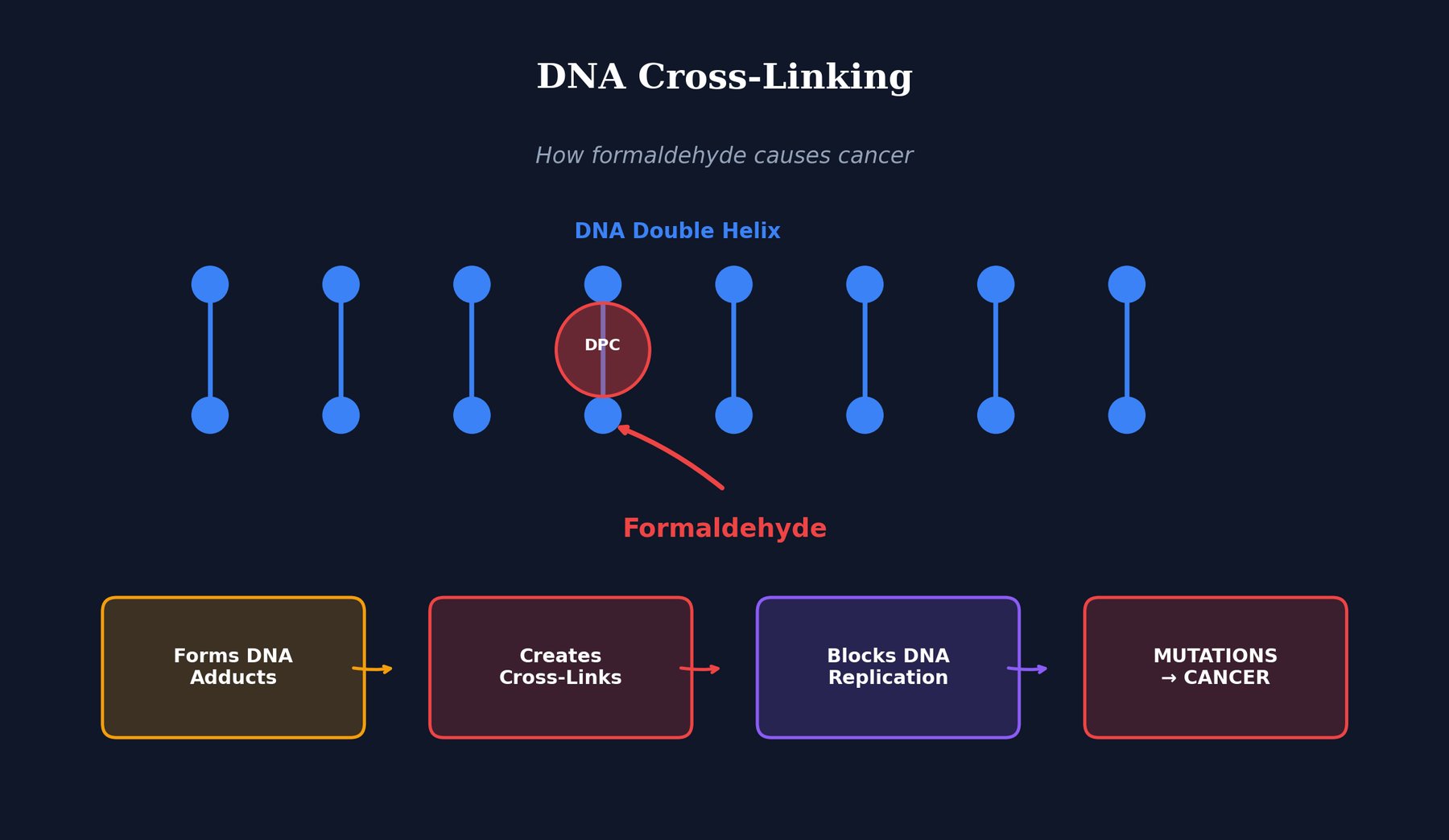
Formaldehyde's most serious damage occurs at the molecular level where your DNA resides. When formaldehyde encounters DNA bases (the chemical letters of your genetic code), it forms adducts—chemical bonds that tether the formaldehyde molecule to the DNA.
The initial lesion is called an N-hydroxymethyl mono-adduct, where formaldehyde attaches to guanine and adenine bases. But formaldehyde doesn't stop there. It can form methylene bridges—covalent bonds that create cross-links between DNA strands or between DNA and proteins. These DNA-protein cross-links (DPCs) physically deform the DNA double helix and block the cellular machinery that reads and replicates DNA.
When replication machinery encounters these cross-links, it cannot proceed normally. The cell either attempts to repair the damage (which can introduce errors) or the replication fork stalls, leading to incomplete DNA synthesis. These errors and stalls increase the mutation rate—the frequency of copying errors when DNA replicates. Over time, accumulated mutations in critical genes can activate oncogenes (cancer-promoting genes) or inactivate tumor suppressors (genes that prevent cancer), ultimately leading to malignant transformation.
This is how a simple two-atom molecule can reprogram cells to become cancerous. It's not a theory—it's documented in decades of molecular and epidemiological research.
Multi-System Health Effects
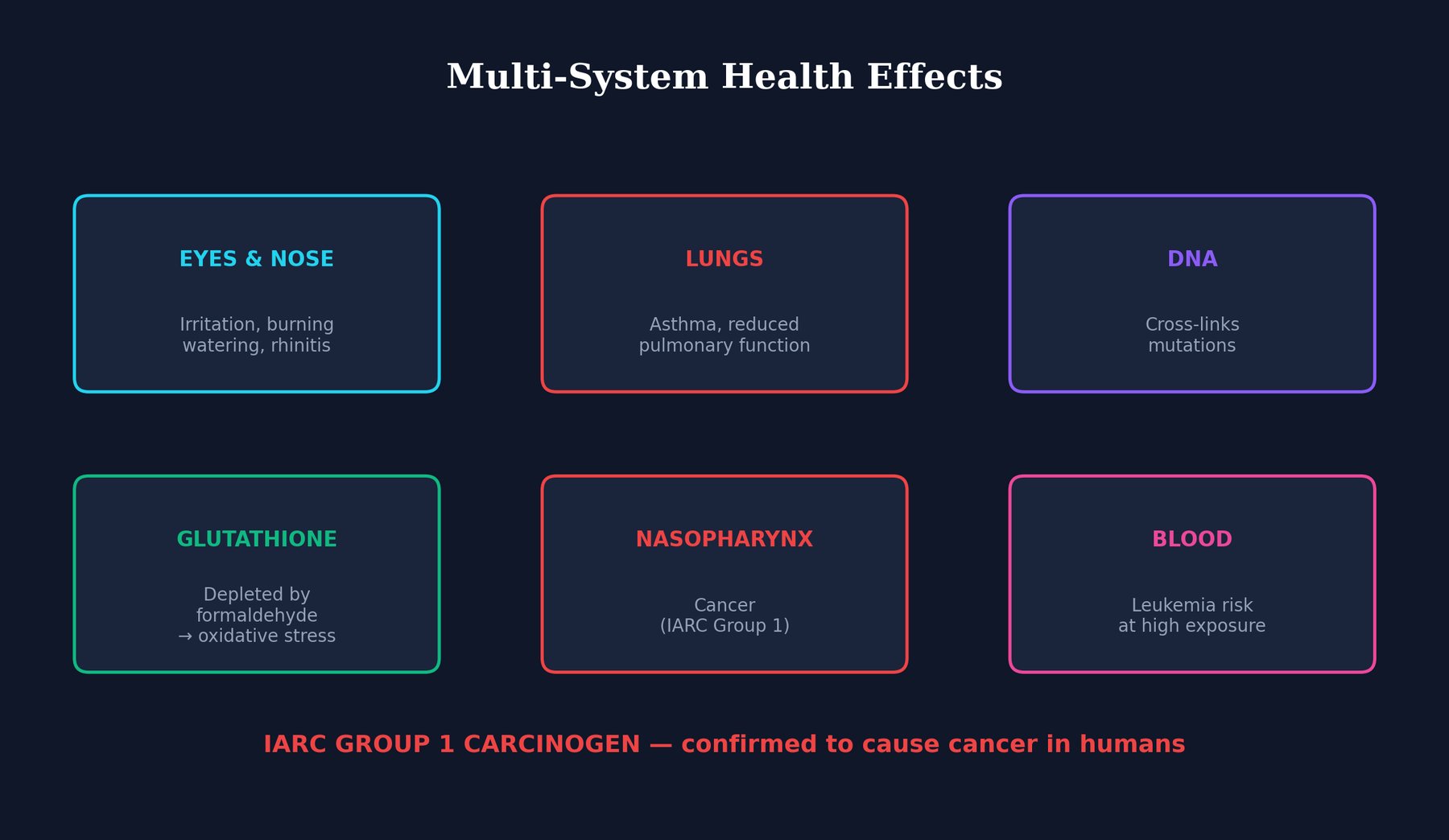
Because formaldehyde is a volatile chemical that becomes airborne, it affects every system exposed to air—starting with the respiratory tract and spreading to the rest of the body through absorption.
Eyes and Nose: The Water-Soluble Irritant
Formaldehyde is highly water-soluble, meaning it readily dissolves in the mucous membranes that line your eyes, nose, and throat. This causes immediate irritation—watery eyes, burning sensation, and nasal inflammation. These symptoms appear quickly after exposure and are typically reversible once exposure ends, but they indicate you've been inhaling a toxic chemical.
Lungs: Inflammation and Reduced Function
Inhaled formaldehyde reaches the lungs where it triggers inflammatory responses. The immune system recognizes formaldehyde-protein adducts as foreign and mounts an inflammatory attack. Over time, repeated exposure can cause chronic inflammation, reduced lung function, and sensitization that leads to asthma. People with asthma exposed to formaldehyde experience more frequent and severe asthma attacks.
DNA: Cross-Linking and Genomic Instability
As discussed above, formaldehyde directly damages DNA through cross-linking and adduct formation. This occurs in lung cells that inhale the chemical, and potentially in other tissues depending on exposure route. The damage increases mutation rates and genomic instability—the hallmark of cancer development.
Antioxidant System: Glutathione Depletion
Formaldehyde consumes glutathione, your body's primary antioxidant and detoxification molecule. When glutathione is depleted, your cells become vulnerable to oxidative stress—damage from reactive oxygen species that would normally be neutralized. This oxidative stress adds to the carcinogenic burden from DNA damage.
Nasopharynx: Site of Highest Cancer Risk
The nasopharynx—the space behind your nose at the top of your throat—experiences the highest formaldehyde concentrations because air enters the body through the nose and formaldehyde is highly soluble in the moist tissues there. This explains why nasopharyngeal cancer is the primary cancer linked to formaldehyde exposure in humans. Workers in industries with high formaldehyde exposure show increased nasopharyngeal cancer rates.
Blood: Leukemia at High Exposure
At very high formaldehyde exposure levels (industrial settings, not typical homes), leukemia risk increases. This suggests formaldehyde can damage bone marrow cells that produce blood cells, leading to malignant transformation in those tissues.
Health Effects by Exposure Level
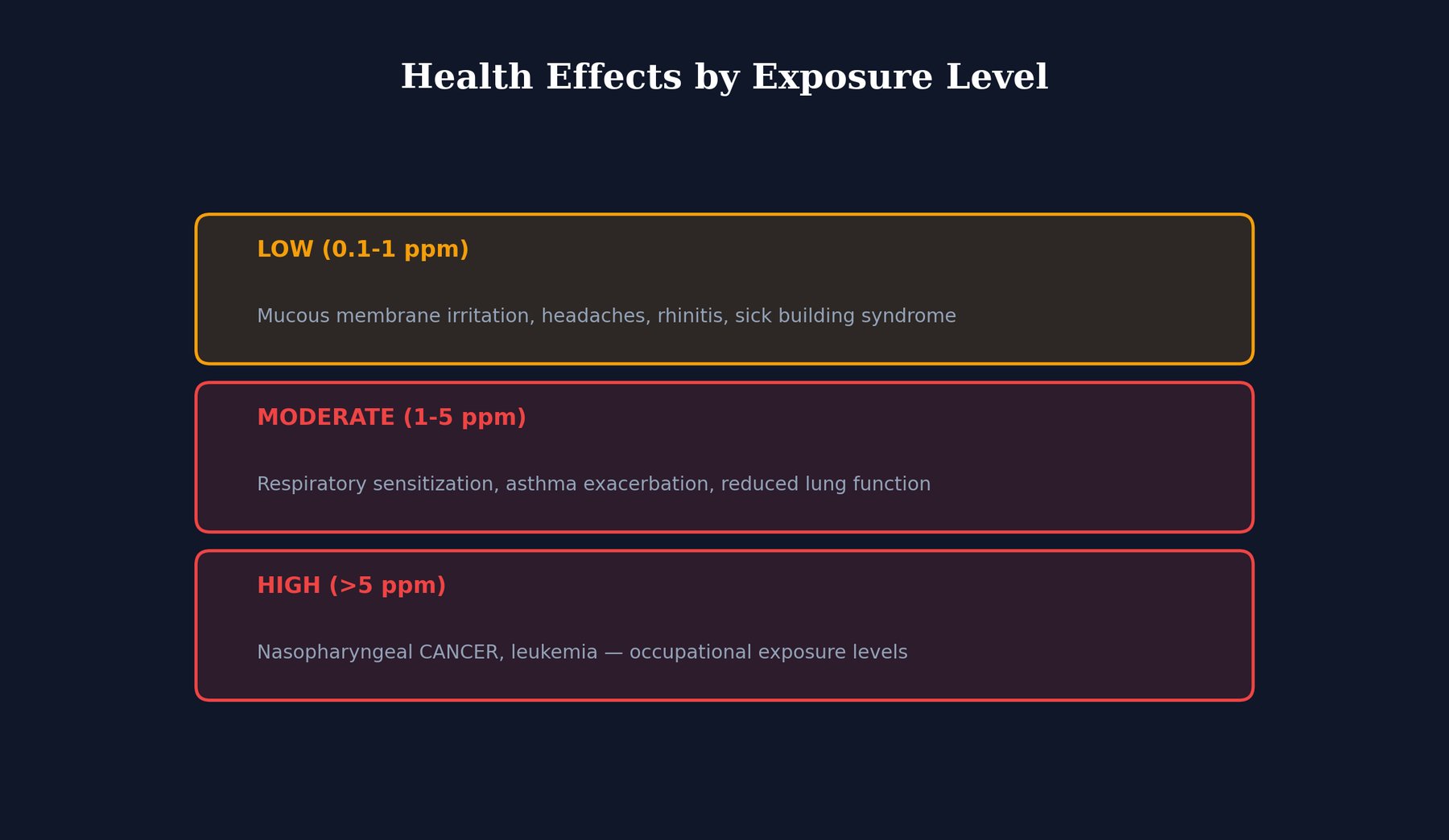
The severity of formaldehyde health effects depends on the concentration in air and duration of exposure:
Low Exposure: 0.1–1 ppm
Even at these relatively low concentrations, formaldehyde causes mucous membrane irritation (watery eyes, throat irritation), headaches, and contributes to sick building syndrome—the constellation of symptoms people experience in homes with poor indoor air quality. Prolonged exposure at these levels increases cancer risk over years and decades of exposure.
Moderate Exposure: 1–5 ppm
At moderate concentrations, formaldehyde causes respiratory sensitization—the development of increased sensitivity to formaldehyde such that even lower future exposures trigger symptoms. This can progress to asthma where formaldehyde exposure reliably triggers airway constriction, wheezing, and breathing difficulty. Lung function becomes measurably reduced.
High Exposure: >5 ppm
Concentrations above 5 ppm are rarely seen in homes but occur in some industrial settings. These levels cause severe acute symptoms—severe respiratory distress, significant irritation, and substantial cancer risk. Both nasopharyngeal cancer and leukemia show increased incidence at these exposure levels.
Critical Point: No Truly Safe Level
Unlike some toxic chemicals where low exposures are deemed "safe," formaldehyde's carcinogenicity means any exposure above background carries some risk. IARC's classification as a Group 1 carcinogen inherently means there is no exposure threshold below which cancer risk is zero. The question is not whether formaldehyde causes cancer, but rather the magnitude of risk at different exposure levels.
What This Means for You
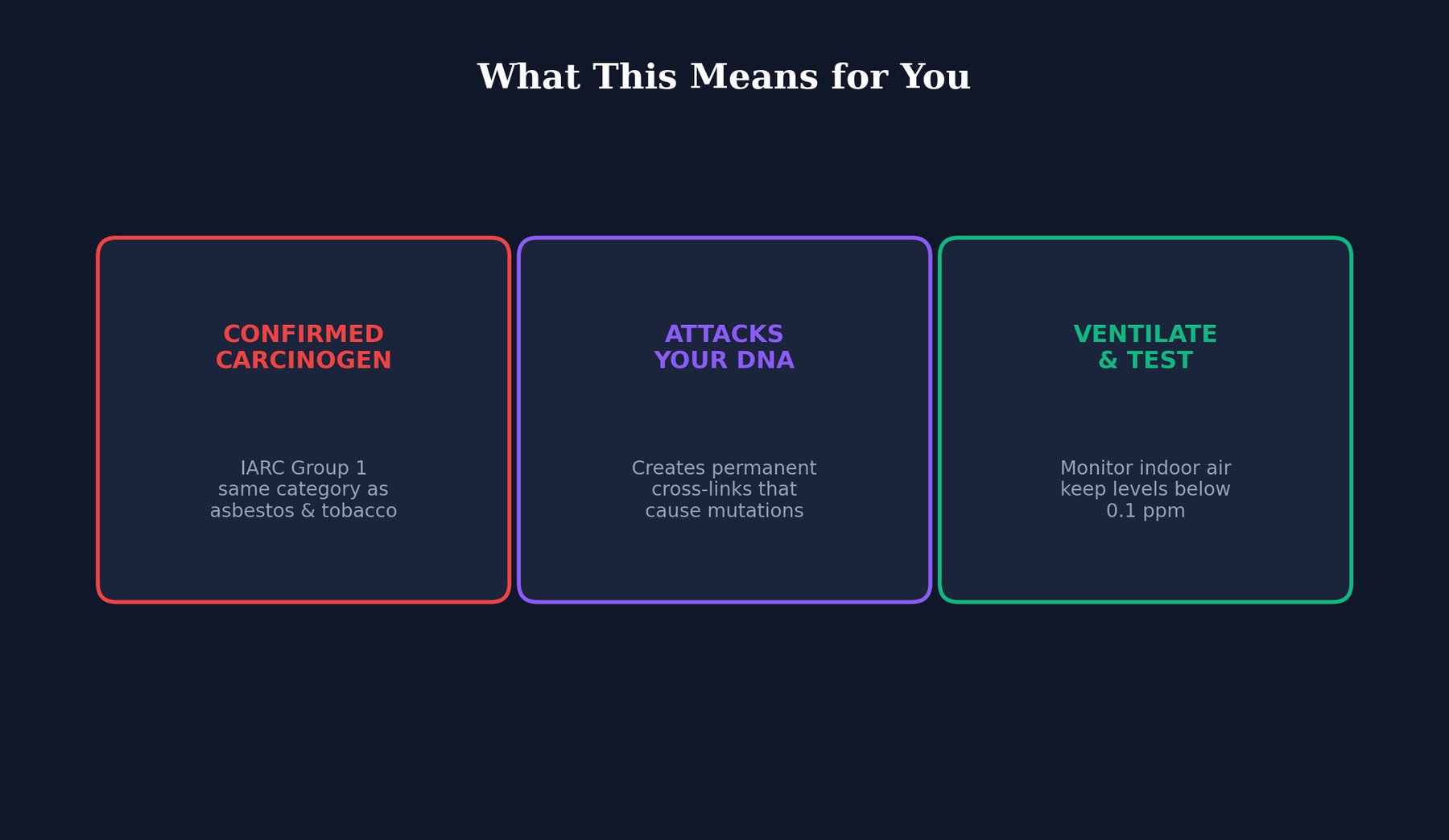
If formaldehyde is present in your spray foam insulation or other building materials, several critical conclusions emerge:
Confirmed Carcinogen
Formaldehyde is not a suspected carcinogen or a chemical "under review"—it is a confirmed human carcinogen. This classification comes from the highest scientific authorities and decades of epidemiological evidence.
Attacks DNA Directly
Unlike some substances that cause cancer through indirect mechanisms, formaldehyde directly attacks DNA and forms cross-links that block replication and cause mutations. This is a direct, mechanism-based pathway to cancer.
Monitor Indoor Air
If your home contains foam or other materials that may off-gas formaldehyde, monitor indoor air quality. Formaldehyde can be measured with specific air quality monitors. Keep concentrations as low as possible—ideally below 0.1 ppm, certainly below 1 ppm.
Proper Ventilation Is Essential
Ensure your home has adequate ventilation that brings in fresh outdoor air and removes indoor air, particularly after installation of foam or other formaldehyde-containing materials. HVAC systems should not simply recirculate indoor air when formaldehyde is present.
Seek Medical Evaluation for Symptoms
If you develop respiratory symptoms, asthma, or persistent headaches following exposure to foam or other building materials, seek evaluation from a healthcare provider. Report the specific exposure and timing. An occupational or environmental medicine specialist may be particularly helpful in assessing formaldehyde-related health effects.
Long-Term Cancer Risk
Remember that cancer from formaldehyde exposure typically develops over years or decades. You may not feel sick from low-level formaldehyde exposure, but your DNA is being damaged with each breath. The absence of acute symptoms does not mean the exposure is safe.
Sources & References
- IARC Monographs on the Evaluation of Carcinogenic Risks to Humans: Formaldehyde
- WHO Indoor Air Quality Guidelines
- EPA Formaldehyde Assessment and Standards
Built This Way in the Bay Area
This is one of the reference pages we wrote for our own specification work. Earth Bound Homes builds healthy, toxin free, mold free Passive Houses, and this library is the research behind those decisions rather than marketing copy.
If you are planning a new home or a deep remodel and want it built to this standard, we are happy to talk it through. Earth Bound Homes builds in Palo Alto, Atherton, Menlo Park and across the San Francisco Bay Area.