Earth Bound Homes · Featured Project

Santorini
Passive House

A whole-home Passive House retrofit in Los Gatos, designed and built to certified Passive House performance — using roughly 90% less energy than a code-built California home, with continuously filtered fresh air, a near-airtight envelope, and a non-combustible exterior engineered for the wildland-urban interface.
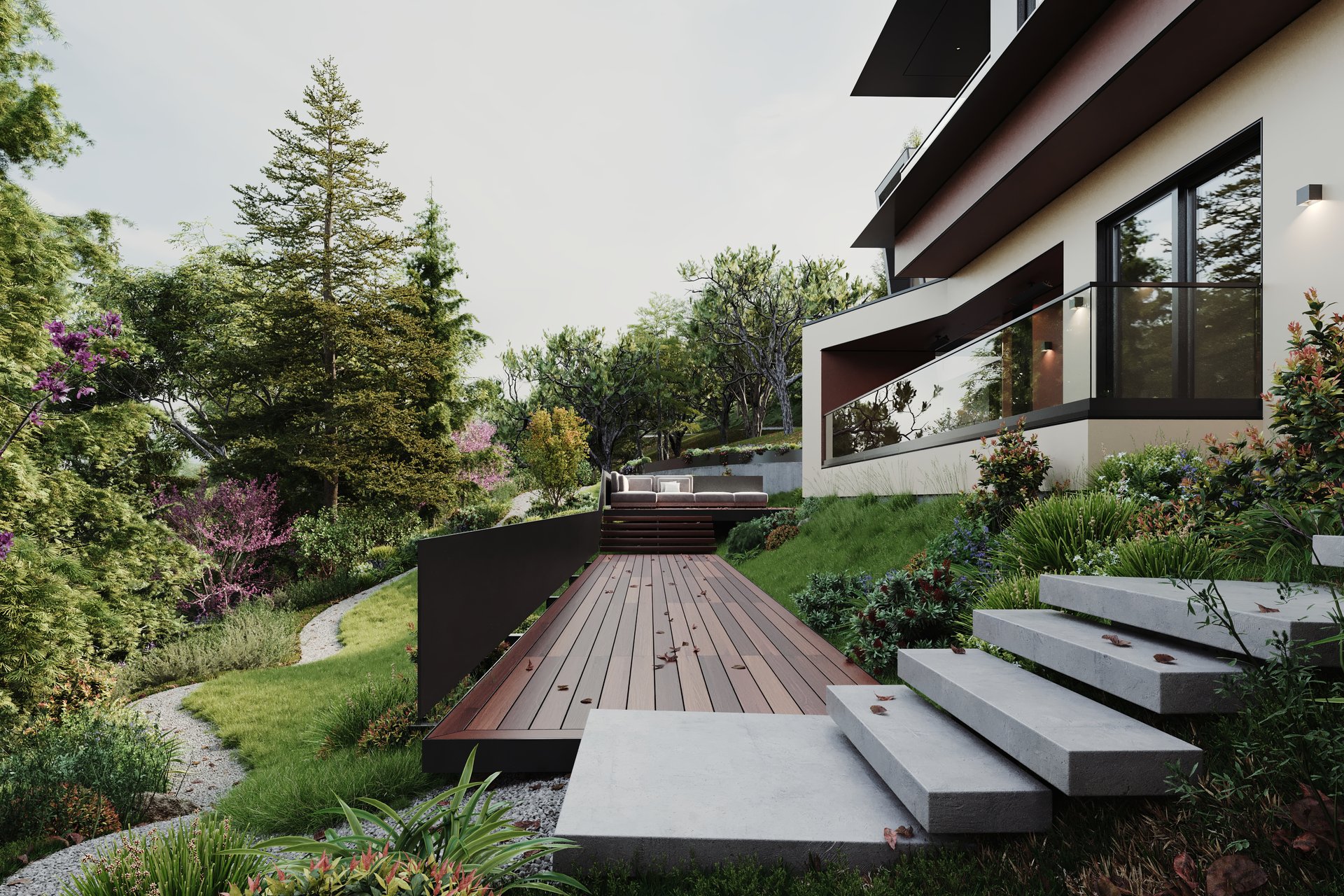
Santorini Passive House — exterior rendering by Spark Studio
Treated floor area
5,473 sf · 508.65 m²
Standard
Passive House Classic (PHI)
Project type
Whole-home retrofit · Los Gatos, CA
Climate zone
ASHRAE 3B (Warm, Dry) · Title 24 CZ4

Performance, in four numbers

0.6ACH₅₀
Airtight envelope
~10× tighter than code
R-35
Wall continuous insulation
roof R-65 · slab R-20
~90%
Less heating energy
than a code-built home
≈ 0
Net annual energy
solar PV-powered
Heating energy

A whole winter of heat, on a space-heater worth of energy.

Continuous insulation, an airtight shell, and triple-pane windows mean almost no heat escapes. The whole home stays warm with a fraction of the energy a typical house needs.

Older / leaky home
~80kWh/m²·yr
Big furnace, never quite warm enough
Code-built (CA Title 24)
~50kWh/m²·yr
Better, but still substantial heating
This Passive House
11.4kWh/m²·yr
PH limit ≤ 15 · achieved ✓

A typical winter's heating runs on roughly 1/4 to 1/7 the energy of a code-built home.

How we got there

Walls, roof, slab — all wrapped in continuous insulation.

Heat doesn't escape because there's almost nowhere for it to go. The home is built like a thermos: continuous insulation outside the structure, with no thermal bridges through framing, no leaky penetrations, and high-performance triple-pane glazing.

The Passive House "high" envelope targets work out to R-35 walls, R-65 roof, R-20 slab — roughly 2× the effective R-value of a code-built California assembly.

AssemblyU-value≈ R
Wall to exterior (PH 'high' tier)~0.162 W/m²KR-35
Ceiling / roof (PH 'high' tier)~0.087 W/m²KR-65
Slab on grade (PH 'high' tier)~0.284 W/m²KR-20
Windows installed (Uw)~0.86 W/m²K≈ U-0.15
Airtight envelope

A house that doesn't leak.

Most homes have hundreds of small gaps in their walls and ceilings. Each is a path for drafts, energy loss, and — in California — wildfire smoke. This shell is sealed, taped, and pressure-tested.

Older / leaky home
~7ACH₅₀
Drafty in winter, dusty year-round
Code-built (CA Title 24)
~3ACH₅₀
Tighter, but still leaks meaningfully
This Passive House
≤ 0.6ACH₅₀
Blower-door verified · tested ≤ 0.6

About 10× tighter than the same house built to current code.

How we got there

A continuous air barrier, taped seams, and a blower-door test.

Every joint, every penetration is sealed against air movement. A vapor-permeable air-barrier membrane wraps the structure on the outside; tapes and gaskets close every seam; cans, ducts, and electrical penetrations get airtight sealing kits.

It isn't taken on faith — the house is pressurized to 50 pascals with a blower door, and any leak above target is hunted down and fixed before drywall closes the wall.

DetailSpec
Primary air barrierVapor-permeable WRB, taped & sealed
Window/door rough openingsLiquid-applied flashing + tape
PenetrationsAirtight gaskets & sealants
Test methodBlower door @ 50 Pa
Target leakage rate (n50)≤ 0.6 ACH₅₀
Code-built baseline (CA)~ 3 ACH₅₀
Older homes (typical)5–10 ACH₅₀
Healthy filtered air

Always fresh inside. Always.

An airtight house breathes through one place: a continuously running, filtered heat-recovery ventilator. Pollen, traffic soot, and wildfire smoke get filtered out before they reach a bedroom.

Smoke barrierSmoke stays where it belongs — outside.

During wildfire season, most smoke enters homes through the same cracks that leak heat: sill plates, recessed lights, attic penetrations. Sealing the envelope means sealing out smoke.

Combined with a filtered HRV that gently pressurizes the interior with clean outdoor air, the family inside has a refuge of breathable air — even when the sky is orange.

Typical home
Smoke pulled inside
This house
Sealed against smoke
HRV FILTERED
23 cfm/person · MERV-13 filtration
Continuous, balanced 24/7 fresh air to bedrooms

ERV/HRV — Heat Recovery VentilatorContinuous fresh, filtered, tempered air.

Outdoor air is filtered to MERV-13 (F7) — pollen, traffic soot, and wildfire PM 2.5 are removed before air ever reaches a bedroom.

The ERV/HRV runs continuously at 23 cfm per occupant, capturing most of the heat in the leaving air on its way out — so fresh air doesn't mean cold air or a big bill. An automatic summer bypass mode allows free night cooling when outside conditions favor it.

HRV system spec

Specified for low fan power, high heat recovery, hospital-grade filtration.

The HRV runs continuously at a low rate, replacing roughly the entire air volume of the home every 2–3 hours with filtered fresh air — quietly, efficiently, and balanced.

Stale air from kitchens and baths leaves through one duct; fresh outdoor air enters through another, passing through the filter and the heat exchanger on the way to bedrooms and living spaces.

ParameterSpec
Ventilation systemERV/HRV continuous, balanced
Fresh-air supply rate23 cfm/person (24-hr average)
Supply filtrationF7 / MERV-13
Summer bypassAutomatic — free night cooling when conditions favor
Supply locationsBedrooms · living areas · office
Return locationsKitchen · bathrooms · laundry
AuxiliaryNo range hood recirculation; sealed make-up air
Acoustic comfort

Quiet enough to hear yourself think.

Triple-pane windows with two argon-filled cavities aren't only thermal insulators — they're sound insulators. Street traffic, neighbours, the lawnmower next door: all quieter from the inside.

Single-pane glazing
~22dB OITC
Outside noise pours in
Double-pane (code)
~28dB OITC
Quieter, but you still hear traffic
SHHH
Triple-pane · this house
~38–42dB OITC
Traffic feels a block farther away

Each ~10 dB drop sounds about half as loud to the human ear.

Window construction

Two argon-filled cavities. Insulated frames. Low-E coatings.

The same triple-pane glazing that drives down heat loss is also a heavy, dense barrier to airborne sound. Each cavity de-tunes a different frequency band; argon damps mid-range traffic; the laminated outer pane handles high-frequency noise.

Frames are insulated and thermally broken — not aluminum, not vinyl — so they don't become a path for either heat or noise around the glazing.

SpecValue
Glazing makeupTriple-pane, two argon cavities, 2× low-E coatings, 1.8" overall
Center-of-glass U-value (NFRC)0.113 BTU/h·ft²·°F (≈ 0.642 W/m²K)
Window U-value installed (Uw)~0.86 W/m²K (≈ U-0.151)
Solar heat gain (g-value / SHGC)0.22
Frame gradephC-Grade Windows/Doors · insulated, thermally broken
Estimated outside-noise reduction (OITC)~38–42 dB
Net Zero Energy

A whole year, on sunshine.

Because the envelope is so efficient, the entire home — heat, cooling, hot water, induction cooking, EV charging — runs on a modest rooftop solar array. The grid acts as a battery: surplus power flows out in summer, and comes back in winter.

PV array · all-electricGenerates approximately what it uses.

Annual solar generation is sized to match annual whole-house electricity demand. With Passive House construction cutting heating/cooling loads 80–90%, the panels needed are roof-friendly, not roof-covering.

All-electric end-uses: heat-pump heating & cooling, heat-pump water heating, induction cooking, EV charging — no gas line, no combustion in the home.

≈ 0 draw from grid surplus to grid draw from grid
Annual generation ≈ annual consumption · net ≈ 0 kWh
Energy budget

The whole-house electric load is small, so the PV is small.

Because Passive House construction collapses heating and cooling demand by ~80–90%, the residual electricity load is mostly water heating, plug loads, lighting, induction cooking, and EV charging. A right-sized rooftop array balances that annual load.

Operating cost: essentially the cost of being grid-connected, after accounting for net-energy metering. No gas line, no combustion appliances, no CO from cooking.

Energy useApproach
Heating & coolingAir-source heat pump · all-electric
Domestic hot waterHeat-pump water heater
CookingInduction (no gas service)
EV chargingLevel 2 — wired in
BackupAll-electric · no combustion in the home
GenerationRoof PV — sized for net-zero annual electricity
Net annual energy≈ 0 kWh / year
Wildfire-ready

Built to shrug off embers.

Wildfires destroy homes mostly through wind-blown embers finding flammable surfaces and unsealed openings. This exterior is built almost entirely from non-combustible materials.

Wood / vinyl exterior
Vulnerable
Embers ignite siding and trim
Code-built (CA Ch. 7A)
Mixed
Some non-combustible elements
NON-COMBUSTIBLE
This Passive House
Class A
Stucco · fiber-cement · standing-seam metal · ember-resistant vents

Combined with the airtight envelope, the result is a home that resists ignition outside and keeps smoke outside.

Non-combustible exterior assembly

Built per California's wildland-urban interface guidance — and beyond.

The roof is the primary ember target. So it's standing-seam metal — the highest fire rating available (ASTM E108 Class A) — with sealed edges and ember-resistant attic vents.

The walls are stucco and fiber-cement, with mineral wool in critical layers. There's no exposed wood at the ember-vulnerable details: eaves, rake edges, soffits, and decks are detailed for ignition resistance.

ElementSpec
RoofStanding-seam metal · Class A (ASTM E108)
CladdingStucco + fiber-cement, ASTM E84 Class A
Insulation in fire-critical zonesMineral wool (non-combustible)
Attic / soffit ventsEmber-resistant 1/16" mesh
Eave detailsSealed, no exposed framing
DeckingComposite or non-combustible substrate
Combustible materials at perimeterMinimized · no wood within 5 ft of structure

For the spec-curious

The numbers behind the project.

Independent third-party energy modeling using PHPP (Passive House Planning Package).

Performance

Treated floor area (TFA)508.65 m² · 5,473 sf
Annual heating demand11.4 kWh/m²·yr (PH limit ≤ 15)
Annual cooling + dehumidification13.5 kWh/m²·yr (PH limit ≤ 15)
Airtightness · n50≤ 0.6 ACH₅₀ (PH Classic target)
Active cooling includedYes
Standalone dehumidification requiredNo
Site energy (heating + cooling, combined)~5,600 kWh/yr

Building envelope

Wall (PH 'high' R-value tier)~0.162 W/m²K · R-35
Ceiling / roof (PH 'high' tier)~0.087 W/m²K · R-65
Slab on grade (PH 'high' tier)~0.284 W/m²K · R-20
Window U-value, installed (Uw)~0.86 W/m²K · ≈ U-0.151
Glazing solar heat gain (g-value)0.22 (PH 3-pane spec)
CladdingStucco, fiber-cement, vertical wood accent
RoofStanding-seam metal · Class A

Mechanical

VentilationERV/HRV continuous · MERV-13 (F7) filtration · 23 cfm/person
Heating & coolingAir-source heat pump · all-electric
Domestic hot waterHeat-pump water heater
CookingInduction · no gas service
Solar PVRoof-mounted · sized for net-zero annual electricity
Technical Appendix

The full verification data.

Independent third-party energy modeling using PHPP — preliminary values from the Passive House design review.

PHPP Verification — Building Profile

ParameterValueUnit / Note
Project typeBuilding RetrofitWhole-home Passive House retrofit
CityLos Gatos, CALatitude 37.23°, Longitude −121.95°
Site elevation174 m · 570 ftAltitude-corrected climate dataset
Treated Floor Area (TFA)508.65m² · 5,473 ft²
Gross envelope area1,566.37m² · 16,854 ft²
Form factor3.1ft²/ft² (envelope ÷ TFA)
Number of units1Single-family
Occupancy7persons
ASHRAE climate zone3BWarm, Dry
CA Title 24 climate zone4
PHI climate zone (site-specific)Warm
Hygiene Criterion exterior temp9.4°C · 49.0 °F
Comfort Criterion exterior temp (12 coldest hrs)1.2°C · 34.2 °F

PHPP Verification — Certification Criteria

CriterionPH limitThis housevs. limitPass
Annual heating demand≤ 15 kWh/m²·a11.424% below✓ Yes
Cooling + dehumidification demand≤ 15 kWh/m²·a13.510% below✓ Yes
Airtightness · n50 @ 50 Pa≤ 0.6 ACH₅₀≤ 0.6Meets target✓ Target
Active cooling includedYes
Standalone dehumidificationNoNot required
Hygiene Criterion (mold/condensation)100% units pass100%Met✓ Yes
Comfort Criterion (interior surface temp)100% units pass100%Met✓ Yes

Exterior Wall Assembly · 2x6 + continuous insulation (PH 'high' tier)

Target wall R-value R-35 (PH 'high' tier).

Layer (interior → exterior)MaterialThickness
Interior finishDrywall w/ vapor-open paint½"
Stud cavityVapor-open insulation (cellulose, dense-pack fiberglass, or mineral wool batts)5½"
Sheathing / air barrierOSB or plywood, taped & sealed at all seams and penetrations½"
Continuous exterior insulationMineral wool, EPS, or wood fiber · metal fasteners4–5"
Weather barrierVapor-open WRB, wind-barrier function
Vented cavityPressure-treated furring strips¾"
CladdingStucco · fiber-cement · vertical wood accent (per architectural)
Wall assembly target R-value2x6 + continuous insulationR-35

Roof Assembly · PH 'high' tier

ElementSpecTarget
RoofingStanding-seam metal · Class A (ASTM E108)
UnderlaymentHigh-temp self-adhered membrane
Sheathing / air barrierPlywood, taped seams
Continuous insulationPolyiso (or equivalent) — sized for target R-value
Ceiling / Roof target R-valuePH 'high' tierR-65

Slab on Grade · PH 'high' tier

LayerMaterialTarget
SlabConcrete4"
Sub-slab continuous insulationXPS or EPS foam (closed-cell)R-20
Vapor barrierReinforced poly, taped to walls
Capillary break / drainageCompacted gravel
Slab on grade target R-valuePH 'high' tierR-20

Window & Door Schedule

SpecValueNotes
Glazing makeupTriple-paneTwo argon-filled cavities, 2× low-E, 1.8" overall
Center-of-glass U-value (NFRC, Ucog)0.113 BTU/h·ft²·°F≈ 0.642 W/m²K
Window U-value installed (Uw)~0.86 W/m²K≈ U-0.151 in U.S. units
Glazing solar heat gain (g-value / SHGC)0.22Low-gain coating (PH 3-pane spec)
Frame gradephC-GradePHI efficiency class for transparent components
Frame constructionInsulated, thermally brokenNot aluminum, not vinyl
Window units per 100 ft² TFA1.5Average unit size 32.4 ft²
Edge spacersPlastic (warm)No metal — avoids thermal bridging
Estimated outside-noise reduction (OITC)~38–42 dBvs. ~28 dB code dual-pane

Mechanical System

SystemSpec
Heating & coolingAir-source heat pump (variable speed) · all-electric
Active cooling includedYes
Standalone dehumidificationNot required
Domestic hot waterHeat-pump water heater (HPWH)
VentilationERV/HRV continuous, balanced
Fresh-air supply rate23 cfm/person (24-hr average)
FiltrationF7 / MERV-13 supply filter
Summer bypassYes — automatic free cooling at night when conditions favor
CookingInduction · no gas service
EV chargingLevel 2, hardwired
Solar PVRoof-mounted · sized for net-zero annual electricity
Combustion appliancesNone — all-electric, no gas service

Glossary

Passive House
An international building-performance standard for very low energy use, comfort, and air quality. Originated at the Passivhaus Institut in Darmstadt, Germany.PHI Classic is the entry tier; PHI Plus and Premium add renewable-energy thresholds.
Treated Floor Area (TFA)
The conditioned, occupied floor area used as the reference area for all PHPP performance metrics. Roughly equivalent to interior heated area.
U-value (W/m²·K)
Rate of heat loss per unit area per degree of temperature difference. Lower is better. Used internationally and in PHPP.
R-value (ft²·°F·h / Btu)
The U.S. equivalent — thermal resistance. Higher is better. R = 1 / (U × 0.176).
ACH₅₀ / n50
Whole-house air leakage rate when pressurized to 50 pascals — the standard blower-door measurement of envelope tightness.Passive House target: ≤ 0.6 air changes per hour at 50 Pa.
Primary Energy / PE (kWh/m²·a)
Total non-renewable energy demand including the upstream losses of generating, distributing, and delivering each kWh consumed.Passive House Classic limit: ≤ 120 kWh/m²·a.
HRV / Heat-Recovery Ventilator
A balanced mechanical-ventilation system that exchanges stale indoor air for filtered outdoor air, while transferring most of the heat from the outgoing stream to the incoming stream — without mixing the airstreams.
Heat Pump
An appliance that moves heat instead of generating it through combustion — typically delivering 3–4 units of heat for every unit of electricity used. Same device cools by reversing the cycle.
SHGC / g-value
The fraction of solar heat that passes through a window. Higher = more passive solar warming in winter; lower = less unwanted solar gain in summer. PHPP uses g-value (0–1).
Triple-Pane Window
A glazing unit with three panes of glass and two sealed cavities (typically argon-filled). Provides ~2x the thermal performance and significantly more sound attenuation than a code-minimum double-pane window.
Net Zero (Energy)
Annual on-site renewable energy generation equals annual energy consumption. The grid acts as a battery: surplus flows out in summer, comes back in winter.
WUI · Wildland-Urban Interface
The zone where development meets undeveloped wildland. California Building Code Chapter 7A governs ignition-resistant construction in WUI zones. This project applies and exceeds those standards.
Thermal Break
A non-conductive layer (insulation) interrupting an otherwise continuous conductive path through framing — critical for getting a wall's effective R-value close to its nominal R-value.
Air Barrier
A continuous layer that stops bulk air movement through the building envelope. Different from a vapor barrier — they're designed to do different things.
Continuous Insulation
Insulation installed on the outside of the structural framing, in an unbroken layer, so heat can't bypass it through studs or joists.
PHPP · Passive House Planning Package
The Excel-based energy model used to design and verify Passive House buildings. PHPP outputs are independently verifiable.
Blower-Door Test
A pressurization test that measures the air leakage of a completed building. A calibrated fan in a doorway pressurizes (or depressurizes) the house to 50 Pa, and the airflow needed to maintain that pressure is the leakage rate.

Project Team

Earth Bound Homes

General contractor & Passive House builder.
Building the next generation of high-performance homes in the Bay Area.

Spark Studio

Architecture & design.

Whole-home Passive House retrofit · Los Gatos, CA · construction 2026. Performance values are preliminary, sourced from third-party PHPP modeling — final values may shift through detailed design and construction. "Code-built California home" baseline reflects current Title 24 prescriptive minimums.